
EPDM and Oklahoma's Summer Heat, Black Membrane Tradeoffs
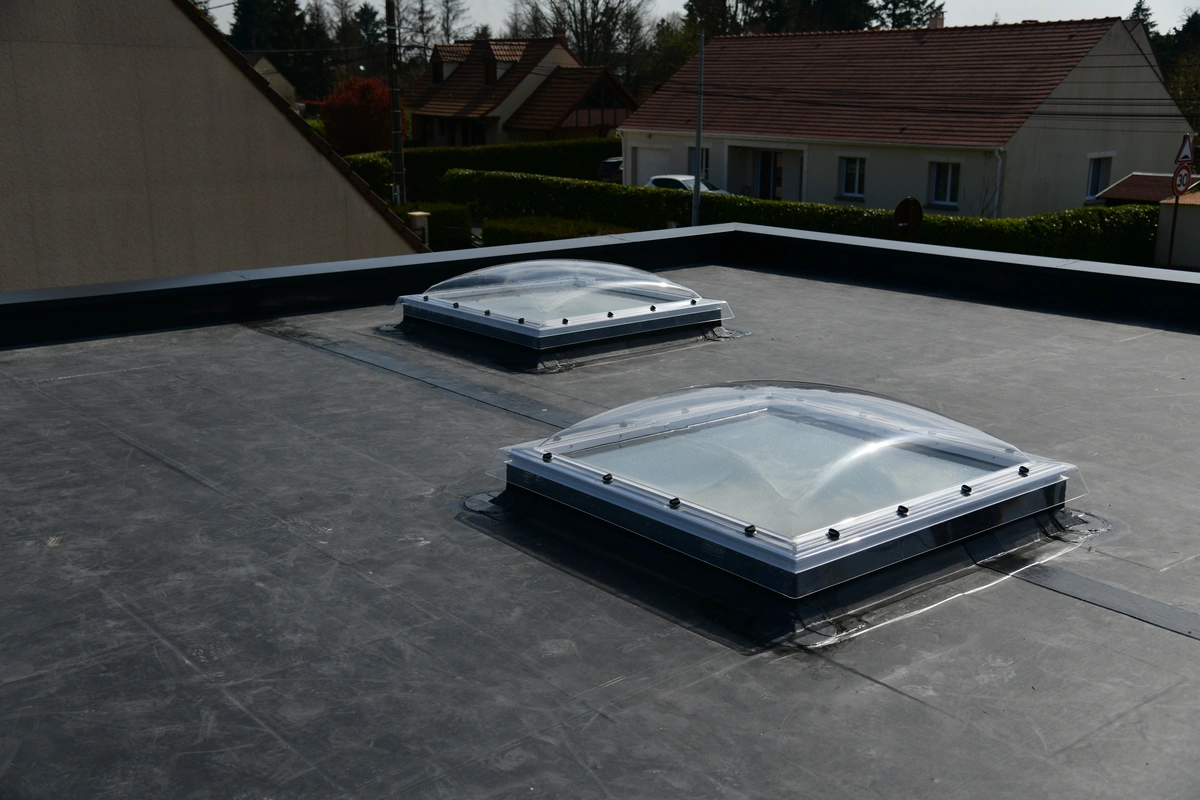
Oklahoma City summer surface temperatures on black EPDM membranes regularly exceed 175°F in July and August. That surface temperature increases the cooling load on the building's HVAC system and accelerates thermal cycling stress at seams and flashings. For buildings without energy compliance requirements, older industrial, warehouse, and distribution buildings, black EPDM remains a serviceable specification. For any OKC building where energy compliance is required or where HVAC operating cost is a meaningful line item, white or light-colored membrane is the honest recommendation.
White EPDM and fleece-back EPDM systems are available and address the heat-absorption issue, but the cost premium over standard black EPDM narrows the cost advantage over TPO. We run the lifecycle cost comparison for each OKC building and present the numbers, we do not push EPDM on buildings where TPO is the better-performing, better-warranted specification.
EPDM Attachment Methods for OKC Wind-Uplift Requirements
Ballasted EPDM is what we are removing from Oklahoma City's aging industrial inventory, not installing new. The system, loose-laid membrane weighted down by river-wash stone ballast, is a structural load that most modern buildings cannot support, and the stone creates an airborne-projectile risk in tornado-track events that we discuss explicitly when any owner asks about ballasted systems in this market. The structural load concern alone (10 to 12 pounds per square foot) disqualifies most OKC buildings as candidates for new ballasted installation.
Mechanically attached EPDM uses plates, fasteners, and battens to secure the membrane to the deck against ASCE 7-22 wind-uplift requirements. For OKC buildings, the fastener pattern in corner and perimeter zones is calculated, not table-referenced, because the tornado-alley wind environment and the high proportion of open-terrain sites in the metro create pressure demands that standard tables underestimate.
Fully adhered EPDM bonds the membrane to a compatible cover board or insulation substrate. We specify this system on reroofs where the detail quality at penetrations and parapets is the priority and where the building's exposure category warrants it. Adhered systems eliminate the membrane flutter and fastener backout that mechanically attached EPDM can develop over time under Oklahoma thermal cycling.
EPDM vs TPO for OKC Industrial Buildings
We install both and recommend based on the building's conditions, not stock position. EPDM's advantages in Oklahoma City industrial applications include better elongation at low temperatures, relevant during OKC's December and January cold snaps, and better resistance to petroleum-based chemical exposure for buildings adjacent to oil-field equipment operations or in the NW OKC industrial corridors with chemical-process adjacency.
TPO's advantages for OKC industrial buildings: white membrane delivers energy compliance and HVAC load reduction without an additional reflective coating, hot-welded seams are faster and more consistent than tape seaming, and the 20-year NDL warranty path is more straightforward to qualify for in a tornado-alley environment because the fastener-pattern documentation translates directly to the warranty desk's requirements. We give building owners an honest comparison for their specific building and let the building's conditions drive the decision.
Frequently asked questions
My OKC industrial building has original ballasted EPDM from the 1980s. Do I need to replace it now?
Not necessarily in an emergency sense, well-maintained ballasted EPDM from that era can still hold water. But a 40-year-old system with no warranty, no impact-resistance documentation, and no remaining serviceable life is a liability for capital planning, lender due diligence, and insurance renewal. We do a full inspection with moisture core pulls, drain assessment, and parapet walk, then deliver a written condition assessment with a replacement timeline and budget range.
Why does ballasted EPDM raise concerns in the OKC market specifically?
Two reasons. First, the ballast stone (10 to 12 pounds per square foot) represents a structural load that many older OKC industrial buildings cannot support for a new installation, we assess structural capacity before specifying any ballasted system. Second, in a tornado-track event, loose ballast stone becomes airborne debris. For the OKC metro, which has sustained three EF-5 tornadoes, that is a real design consideration that we raise with every building owner asking about new ballasted installations.
Does EPDM hold up to Oklahoma hail?
EPDM's rubber composition gives it better inherent hail resistance than rigid membranes, but stones exceeding 1.75 inches cause damage on systems without a HD cover board. Our standard EPDM specification includes an HD polyiso cover board that improves impact resistance and supports FM 4470 Class 1 or UL 2218 Class 4 ratings, the documentation Oklahoma commercial property insurers require for premium discount qualification.
Can EPDM be installed over an existing roof on an OKC building?
Yes, with the same conditions that apply to any recover: the existing insulation must be dry on moisture core pulls, the deck must be sound, and the existing system must be compatible with the new assembly. Ballasted EPDM recovers require full ballast removal before the new system is installed, that is a cost and schedule item that belongs in the scope before contract signing.
Next StepAssessing EPDM on an Oklahoma City building?
Our project managers will inspect the roof, pull moisture cores, document the condition, and deliver a written scope, whether the right answer is recover, replacement, or conversion to a single-ply system with a current impact-resistance rating.
Request an EPDM Assessment →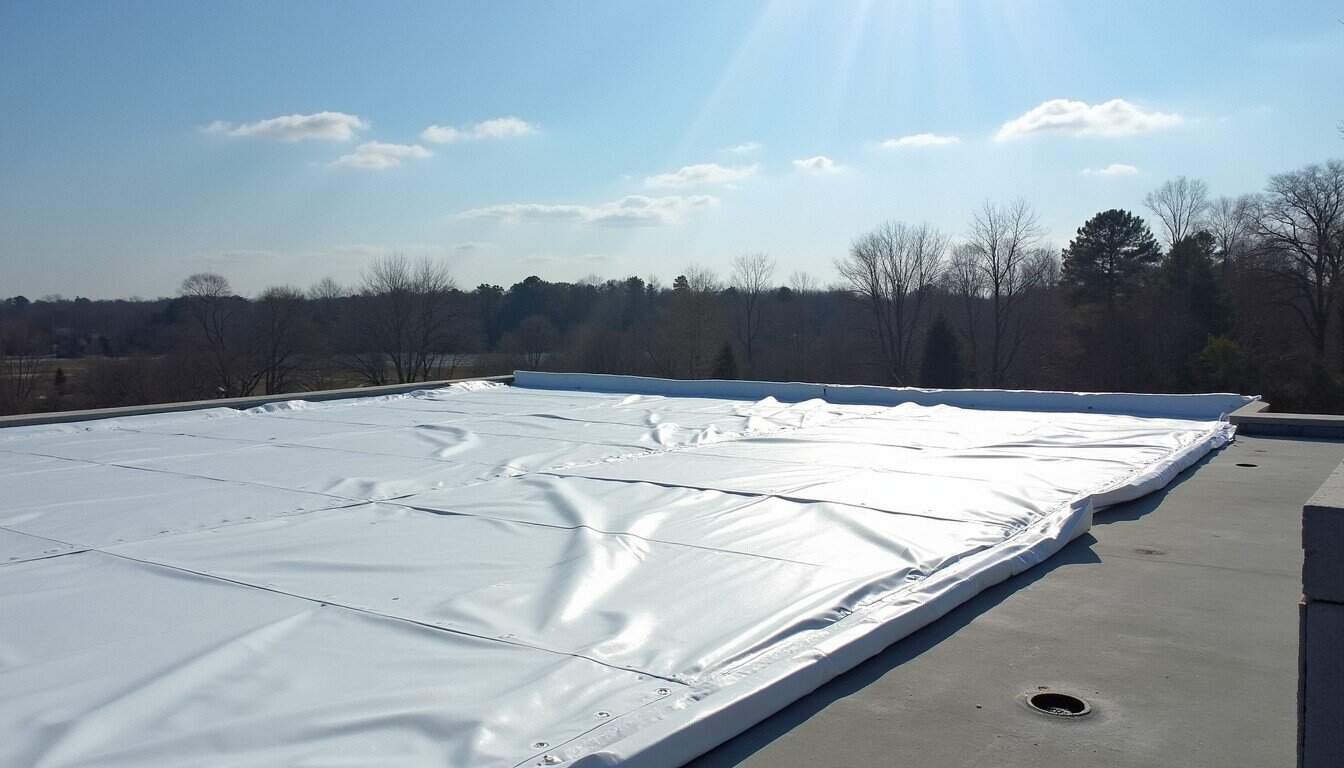
Start with a roof walk.
Send the building address, roof concern, and timing. We will help define the next step.
Contact Us