
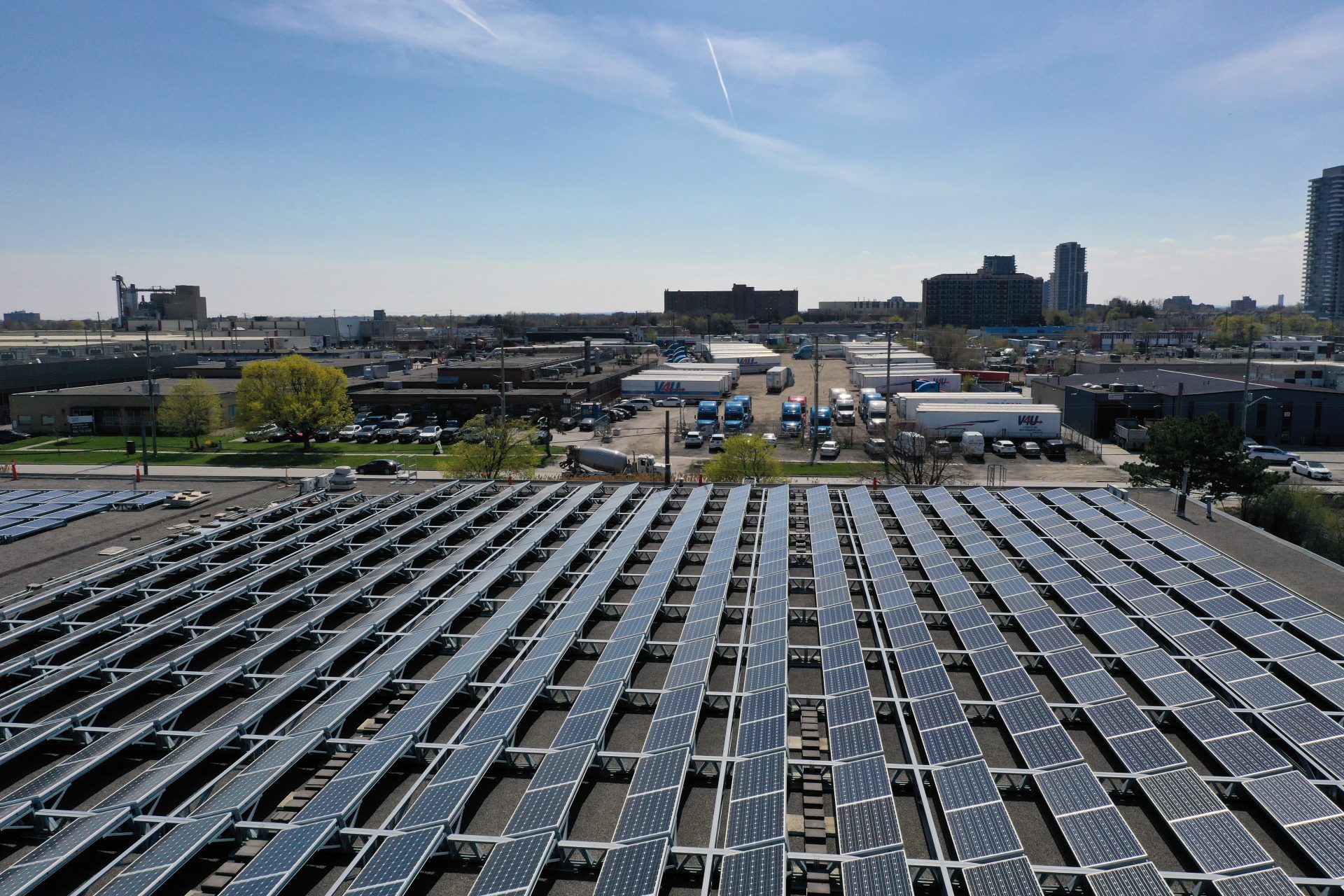
Hail Damage Categories on OKC Commercial Roofs
Oklahoma's hail belt produces all three damage categories on commercial flat roofs, and the categories matter for both claim attribution and repair scope. Cosmetic damage means the membrane surface shows marks but the waterproofing layer is structurally intact, granule displacement on modified bitumen cap sheets, surface scuffing on aged TPO. Functional damage means the waterproofing layer is compromised: fractured TPO at impact centers, split modified bitumen cap sheet, cracked EPDM at lap seam edges where stones hit adjacent membranes.
Impact bruising is the middle category and the most consequential for OKC commercial roofs specifically. Oklahoma County has a high proportion of commercial buildings constructed in the 1980s and 1990s energy-boom era on standard-density polyiso insulation, the facer on that insulation has aged and become more brittle than the same assembly would be on a newer building. When large hailstones hit those roofs, bruising-class insulation damage is more common and more widespread than on newer construction. We document all three categories separately, zone by zone, with a photo index that ties each category to the roof zone diagram.
Granulated modified bitumen systems, common on OKC industrial buildings built before 2000, present a specific documentation challenge. Granule displacement on aged cap sheets looks similar to normal weathering wear, and distinguishing storm-caused displacement from pre-existing wear requires close comparison against the granule retention pattern in undamaged zones. We photograph both and document the contrast in the scope package.
Building the Insurance-Grade Photo Log for Oklahoma Claims
Every significant impact site gets photographed at three distances: a GPS-tagged wide shot showing the roof zone context, a mid-range shot showing the impact pattern relative to seams and penetrations, and a close-up shot with a measurement marker for scale. We cross-reference the documented hailstone size from the NWS Norman storm report against the impact pattern density, the correlation between reported stone size and observed damage density is part of the documentation that anchors the scope to the specific insured event.
Core samples are pulled at locations where we suspect insulation damage beneath an intact-looking membrane surface, at the center of high-impact zones, at low points where water pools after a storm, and at any location where the membrane surface shows subtle dimpling that suggests energy transfer into the insulation. Core results are photographed and logged against the zone diagram. A complete photo log for a 30,000-to-50,000 sq ft OKC commercial building typically runs 80 to 200 photos, enough detail for an adjuster to build a line-item scope without walking every linear foot of the roof.
Storm date documentation is pulled from NWS Norman storm reports, Oklahoma Mesonet station data for Oklahoma County, and SPC storm reports for the event date. Where available, we include hail footprint mapping from commercial weather analytics providers. This documentation anchors the damage to the specific storm your claim covers and addresses the sequential-event attribution issue that arises frequently in OKC's multi-event spring seasons.
Repair vs. Replace After an OKC Hail Event
A roof in good pre-storm condition with functional damage concentrated in two or three zones and no widespread bruising-class insulation damage is typically a repair scope: membrane patch at impact centers, seam reinforcement at stressed lap edges, insulation replacement only under confirmed damaged zones. This is the most common post-hail repair scope on OKC buildings that were properly installed and on active maintenance programs.
A roof with pre-existing insulation saturation, common on Oklahoma County buildings that went unrepaired after prior hail seasons, combined with widespread functional damage across a large percentage of the field is a replacement candidate. Pre-existing saturation and storm damage are documented separately in every scope we produce, because conflating the two creates problems with claim attribution and with the actual repair scope. We document what was there before the storm to the extent we can observe it post-event, and we note clearly what we cannot determine from a post-event inspection alone.
The written repair-vs-replace recommendation includes the basis: damage density by zone, pre-existing condition observations, and whether the system's remaining useful life supports a repair investment. That recommendation is ours as roofers, what happens with it in the insurance process is between you, your adjuster, and any public adjuster or attorney you have retained.
Frequently asked questions
How soon after a hail event should we get an OKC roof inspection?
As soon as practical. Oklahoma City's spring storm season can produce multiple documented hail events within a few weeks, and getting a dated inspection tied to a specific event before the next storm is important for clean claim attribution. We prioritize post-storm mobilization after major Oklahoma County events and can typically schedule within two to three business days of a significant storm, though our schedule compresses after large regional events that hit multiple counties simultaneously.
Do you work directly with insurance adjusters in Oklahoma?
We provide the documentation that adjusters working Oklahoma commercial property claims can work from, zone diagrams, GPS-tagged photo logs, core sample results, and a written repair-vs-replace scope. We are roofers, not public adjusters, and we do not negotiate claims or represent building owners in the insurance process. What we provide is a roof scope package built to the documentation standard that Oklahoma adjusters and public adjusters use.
The adjuster said our hail damage is cosmetic. Is that the end of the claim?
Not necessarily. Cosmetic classification means the adjuster determined the waterproofing function is intact. That may reflect an accurate scope, or it may reflect an inspection that missed functional or bruising-class damage, particularly the insulation-facer damage that is invisible without core samples. If you believe the scope understates the damage, we can provide a second-opinion documentation package with core pulls that your adjuster or public adjuster can review. We do not guarantee outcomes, we provide documentation.
Can you stop active leaks while the insurance claim is being processed?
Yes. Emergency dry-in and temporary patching are scoped and documented separately from the hail damage documentation. We can stabilize the building to stop active water infiltration without contaminating the damage scope, and we document the temporary work separately so it does not complicate the claim attribution.
Next StepNeed a post-hail inspection package for an OKC commercial building?
We will walk the roof, pull core samples where the damage pattern warrants it, and produce a zone-level documentation package tied to NWS Norman storm records that your adjuster or public adjuster can use.
Request a Hail Damage Inspection →
Start with a roof walk.
Send the building address, roof concern, and timing. We will help define the next step.
Contact Us