
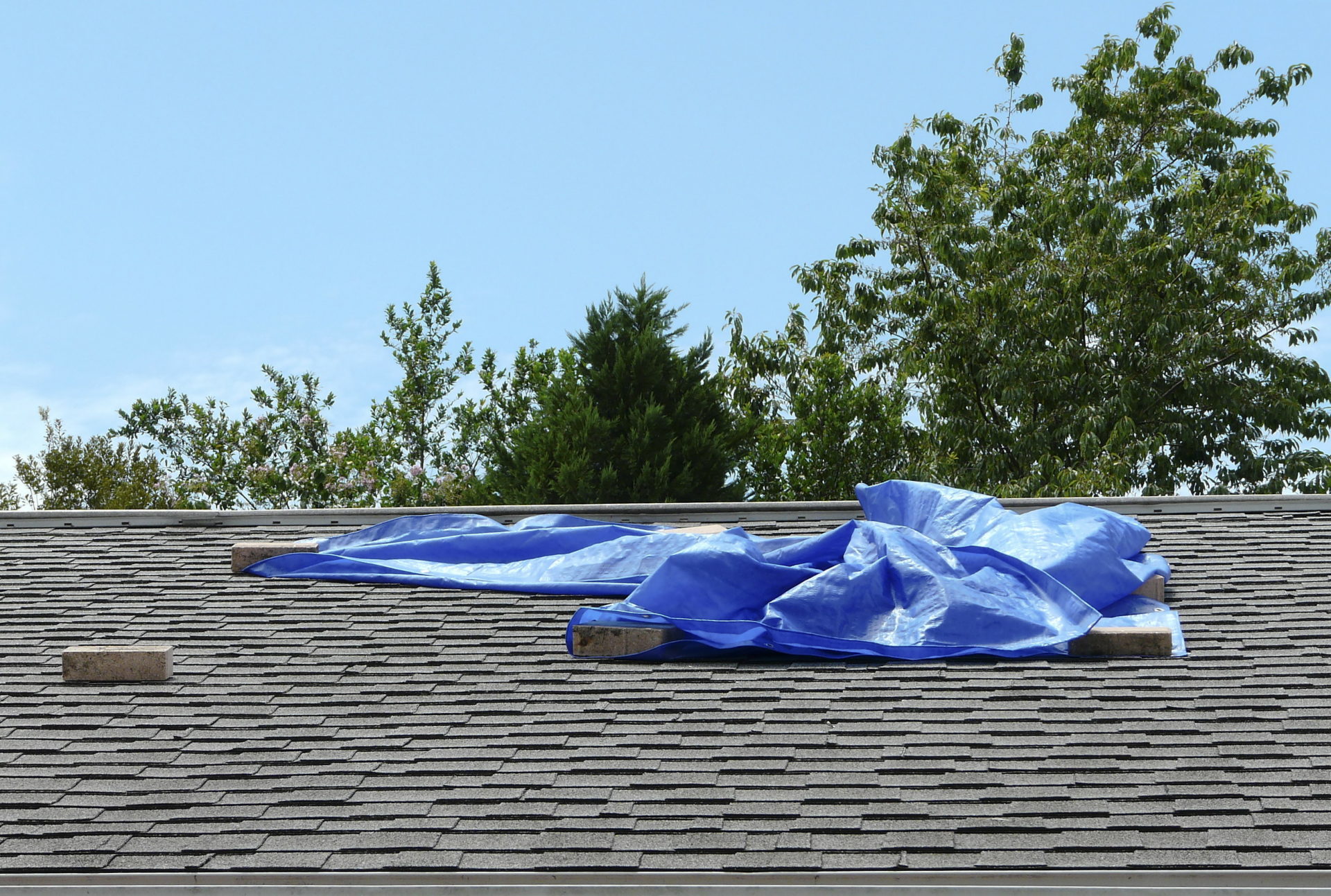
Common OKC Flat Roof Failure Modes
The scope documents leak sources, repair boundaries, photos, and priorities so Oklahoma City owners can separate immediate stabilization from longer-term capital work. Parapet flashing separation is the most consistent failure pattern we document on Oklahoma City commercial buildings. Oklahoma's expansive red clay soil, the same soil type that stretches across most of Oklahoma County, swells and shrinks seasonally with moisture change, and the buildings sitting on that soil move with it. Parapet walls on buildings constructed before 2000 were typically detailed with standard through-wall flashing that did not account for this foundation movement. The result is a horizontal gap at the base of the parapet where water enters laterally. Sealant over that gap lasts one season. A properly scoped base-flashing replacement with a slip-sheet detail that tolerates wall movement runs a decade or more.
Seam separation on mechanically attached TPO and EPDM membrane occurs at predictable locations: at equipment curb corners, near roof drains where the membrane transitions to a sump flashing, and at perimeter zones where wind-uplift loads are highest during Oklahoma's spring storm events. The supercell corridor that tracks northeast from Canadian County through Oklahoma County and Cleveland County generates wind-uplift pressures at building corners that can exceed the design capacity of standard attachment patterns, particularly on pre-2010 installations where the fastener schedule was designed for the code minimum, not for repeated severe-weather exposure. Repair scope requires seam re-welding or compatible seam tape application, followed by probe testing of the repaired area.
Drain failures accelerate membrane deterioration faster than most other single failure modes. Oklahoma City's heavy spring rain events, the Oklahoma Mesonet records significant rainfall in clusters from April through June, concentrate ponding on roofs with undersized or blocked drains. Many commercial buildings in the downtown district and the Automobile Alley and Midtown corridors were constructed with 2-inch or 3-inch drain bodies that cannot pass the volume of a significant spring rainfall. Repair scope: core-cut and replace the drain body and ring, re-flash with a compatible membrane sump, and verify unobstructed connection to the storm drainage system.
- Parapet flashing separation, Oklahoma clay soil movement is the root cause on most pre-2000 buildings
- Seam separation, highest failure rate at curb corners and perimeter wind-uplift zones after spring storm events
- Drain failure and ponding, undersized drain bodies, blocked sumps, misaligned drain rings
- Hail puncture and bruising, cover board compression damage and surface membrane punctures from 2-inch-plus hailstones
- Penetration flashing failures, pipe boots, conduit sleeves, HVAC curb corners on rooftop-equipment-dense buildings
How We Make the Repair-vs-Replace Decision
We pull moisture cores in five to ten representative locations on any roof where insulation saturation is suspected, sagging membrane, interior ceiling staining, or a roof system more than fifteen years old that has experienced repeated hail events. If more than 25 percent of cores read wet, repair economics do not hold. Recovering saturated insulation traps moisture inside the system, voids any manufacturer warranty applied over it, and reproduces the same failure pattern within three to five years. In that situation, replacement is the honest scope recommendation and we write it as such.
When cores read dry and the failure is localized, a parapet run of 40 linear feet with separation, a cluster of failed seams concentrated near one equipment curb, a single ponding area caused by a blocked drain, repair is the right call. We write the scope that way and price it without inflating the project to approach a replacement estimate. Our long-term business depends on accurate recommendations, not on maximizing any single project invoice.
Documentation Delivered With Every Repair
Every repair job closes out with a photo-keyed map of the repair locations on the roof plan, before-and-after photographs at each repair point, product data sheets for every material applied, and a written service record that belongs in the building's roof asset file. This documentation matters for manufacturer warranty claims, most no-dollar-limit warranty policies require evidence of documented maintenance activity. It also matters for the next owner or facility manager who inherits the building and needs a legible repair history rather than a collection of undated invoices.
Buildings on our maintenance programs feed repair documentation into an annual roof condition report, giving the building owner a running asset-condition record over time. That record is particularly valuable in Oklahoma City's storm-active market, where a roof may accumulate documented hail events and corresponding repair scopes across multiple seasons before a replacement decision is warranted.
Frequently asked questions
How do you price commercial roof repairs, fixed scope or time-and-materials?
Fixed scope after a documented inspection. We do not run time-and-materials repair on commercial roofs. After the inspection walk and core pulls, we deliver a written fixed-price scope. If we open a repair area and find additional damage that changes the scope, we stop work, photograph the condition, and contact you before continuing. No surprises on the closeout invoice.
Can you repair a roof that is still under manufacturer warranty from a previous contractor?
Yes. Most manufacturer warranties allow any credentialed contractor to perform repair work, provided the repair materials are compatible with the existing system and the work is documented per the manufacturer's protocol. We carry credentials with major single-ply manufacturers and submit repair documentation to the manufacturer's warranty department after closeout so the warranty record stays intact.
My building took hail damage and the roof is actively leaking. How quickly can you respond in Oklahoma City?
Downtown OKC, Midtown, Bricktown, and the Automobile Alley district, we mobilize within four business hours for documented active leaks. After-hours emergency calls route to an on-call project manager who can dispatch an emergency crew same-evening or at first light. Buildings on our maintenance contracts receive priority dispatch after storm events.
Do hail-damage repairs require insurance documentation before you start work?
No. We can begin repair work and produce independent condition documentation at the same time, photo-keyed damage logs, written failure-mode descriptions, and materials-and-labor records formatted for insurance submission. We do not negotiate with insurance carriers on your behalf, but the documentation we produce is written specifically to support claim processing without a secondary field reinspection by the adjuster.
Next StepRequest a roof report
Get in touch →
Start with a roof walk.
Send the building address, roof concern, and timing. We will help define the next step.
Contact Us