
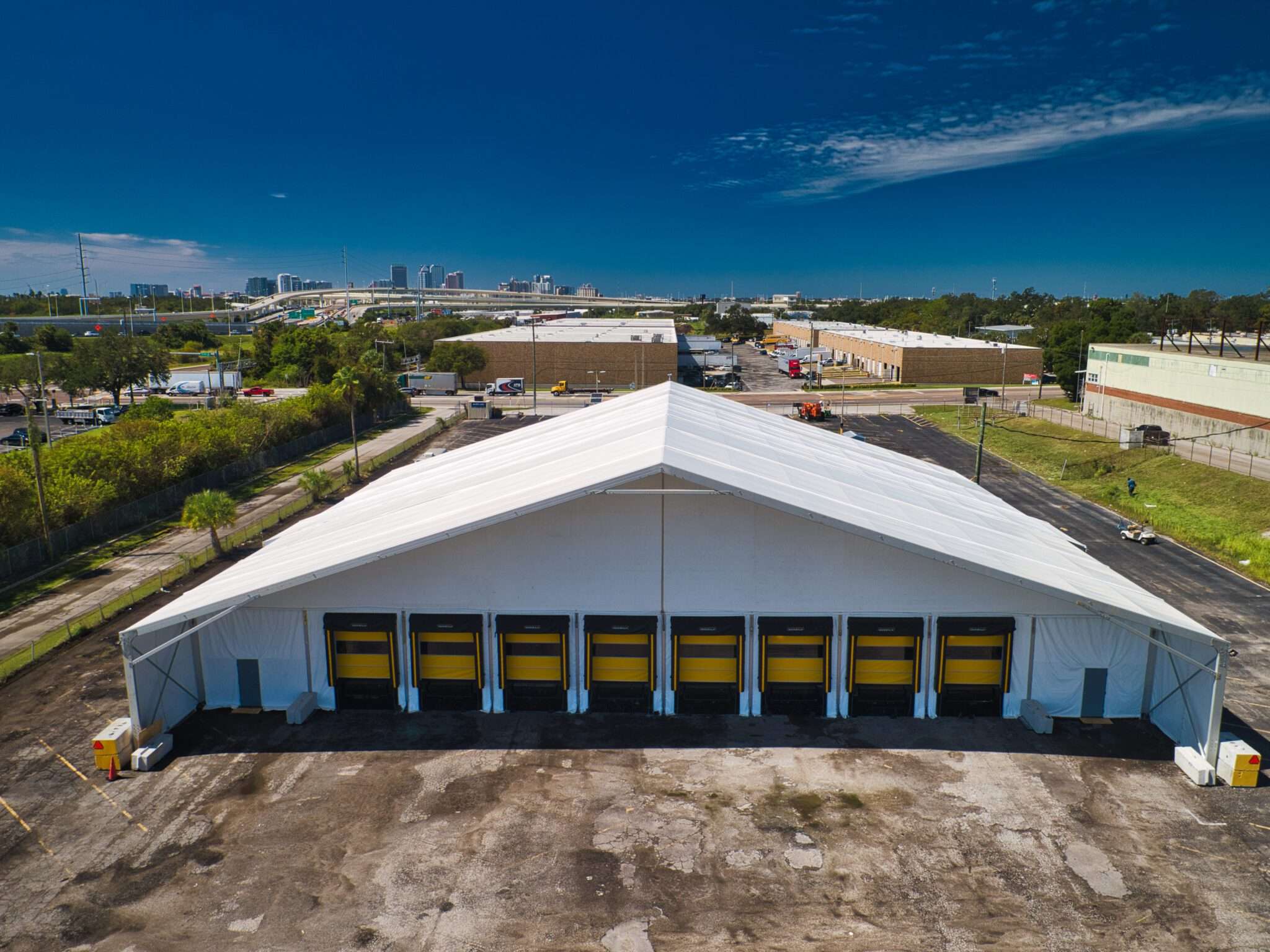
Production Sequencing Around 24/7 Operations
The first conversation we have with every logistics facility manager is about the floor plan and the operating schedule. Where are the pick lines? Where is the receiving dock? Where is the cold storage? Where are the sprinkler system supply risers that will react to smoke or dust from tear-off? We map the production sequence against the floor plan before we set foot on the roof, and we build our daily production plan around what is happening on the floor below.
Tear-off generates debris, membrane scraps, insulation fragments, fasteners, and loose aggregate from any ballasted sections. On a logistics building moving product 24 hours a day, any one of those items hitting a conveyor belt, a forklift operator, or a product pallet is an operational event. We run debris-containment parapet skirts on every open-edge tear-off section and collect and bag debris on each production section before moving to the next. Nail magnets run the dock aprons at end of every shift.
Loading dock proximity requires its own planning. Dock doors at the low side of a distribution building compete directly with crane placement for material staging. We coordinate crane placement and material lift windows with the facility's dock scheduler before mobilization. If a 53-foot trailer is docking at 5 AM, the crane is not in that bay at 5 AM. This requires a pre-mobilization meeting with the dock operations team, not a morning-of conversation.
Wind-Uplift Specification for OKC Logistics Buildings
Distribution buildings along the I-40 corridor west of Oklahoma City and in the open industrial zones around Will Rogers World Airport sit in ASCE 7-22 Exposure C terrain, open land with few surrounding structures to reduce wind pressure on the building envelope. At these exposures, corner and perimeter uplift forces are substantially higher than a sheltered urban site. We run a wind-uplift calculation using the membrane manufacturer's design software for every replacement scope, specific to the building's dimensions, deck type, insulation stack, and exposure category, and we document the design in the project closeout file.
Oklahoma's tornado-alley location means that wind events exceeding design parameters are not theoretical. The I-40 corridor has been in or adjacent to documented tornado tracks in multiple events. We specify FM-rated edge metal, documented corner-zone fastener densities, and reinforced parapet transition details on every logistics building replacement, not because code requires it at every location, but because the history of roof failures in Oklahoma wind events tells us where the envelope fails first.
Dry-In Discipline and Inventory Protection
Distribution centers carry inventory that does not tolerate a water event. A leak above a picking aisle during a spring hail storm can damage product, trigger insurance claims, and create slip hazards that shut down operations. We take dry-in discipline seriously: no roof section is left exposed at end of shift without a temporary single-ply dry-in membrane lapped and fastened. We check Oklahoma Mesonet weather data daily and we do not tear off more footage than we can dry-in before any rain window, including the afternoon thunderstorms that Oklahoma's spring season produces without warning.
Cold storage and temperature-controlled areas within distribution facilities require additional planning. Removing the existing roof assembly over a cold-storage zone creates a heat-gain event that the refrigeration system has to fight during tear-off. We sequence cold-storage sections for the shortest possible
Frequently asked questions
Can you work around our inbound and outbound shipping schedule?
Yes. We ask for your dock schedule and your shift schedule before we finalize the production plan. Crane lifts, material staging, and debris removal are all coordinated against your operational windows. If your peak inbound runs Monday through Wednesday and your lowest activity is Thursday night through Friday morning, we schedule our heaviest material handling for that window.
What do you do to prevent debris from falling into the facility?
We use debris-containment parapet skirts on every open-edge tear-off section. Fasteners and small debris are collected and bagged before we move to the next production section. Nail magnets run the dock apron and surrounding pavement at end of every shift. If the facility manager wants interior protection tarps over sensitive product areas or conveyor systems, we coordinate that with the facility team before production begins.
How do you handle the roof over our cold storage area?
Cold storage reroof sections are sequenced for minimum exposure time. We coordinate with your refrigeration contractor on the system's capacity to handle additional heat load during tear-off. We dry-in with insulation at the same R-value as the final assembly and we do not leave a cold storage section exposed overnight under any circumstances.
How do you address wind-uplift on I-40 corridor buildings?
Buildings in open-terrain industrial zones west of Oklahoma City face ASCE 7-22 Exposure C wind loads with elevated corner and perimeter uplift pressures. We run a wind-uplift design calculation specific to your building and document it in the project closeout file. We specify FM-rated edge metal and documented corner-zone fastener densities on every replacement scope, the standard fastener tables are not adequate for open-terrain Oklahoma buildings.
Next StepDistribution center reroof in the OKC metro?
We scope logistics building reroofs around your operating schedule, loading dock activity, and inventory protection requirements, with OKC wind-uplift engineering built into the specification from the start.
Schedule a Logistics Roof Walk →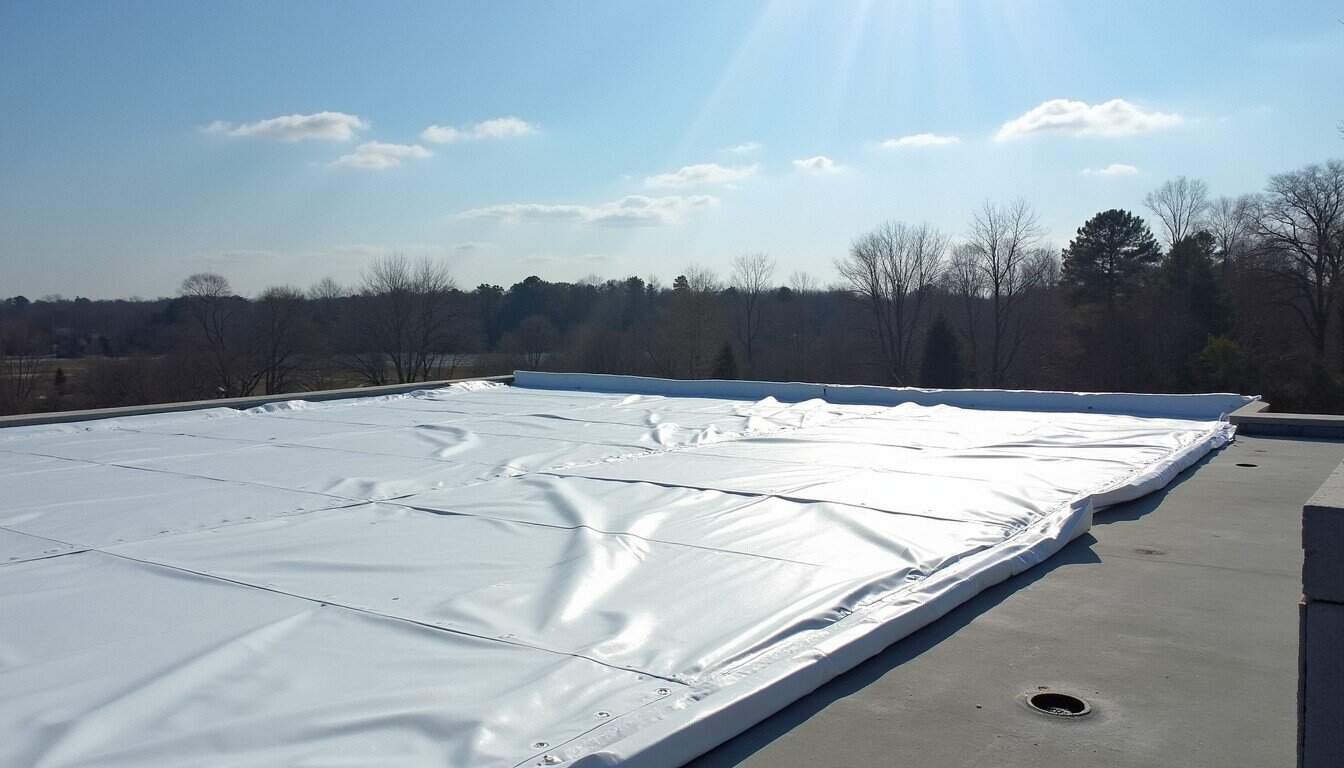
Start with a roof walk.
Send the building address, roof concern, and timing. We will help define the next step.
Contact Us