
Penn Square and Quail Springs Corridor
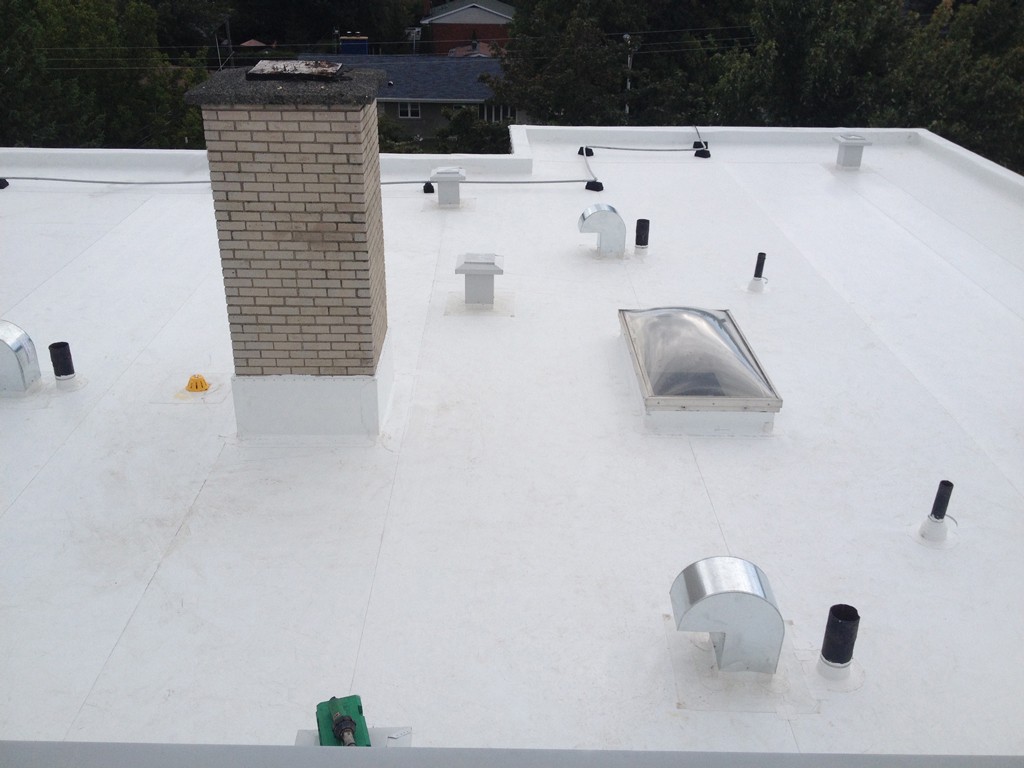
The Penn Square area at NW 63rd and N May Avenue is one of OKC's most dense retail corridors, the mall itself plus the surrounding Sears-era power-center development, the strip centers along NW Expressway, and the outparcel pad buildings that have filled in around the main anchors since the 1990s. Most of the original 1970s-1980s anchor-store buildings are in their second or third reroof cycle. The Quail Springs area along Memorial Road in Edmond, the Quail Springs Mall, the surrounding power-center development, and the high-growth retail corridors along Memorial east toward I-35, represents the 1990s-2000s generation now approaching first-replace.
Anchor-tenant coordination is the central project management challenge on enclosed mall and power-center reroofs. An anchor-store retailer in a Penn Square power center may have its own facilities department with separate approval requirements, its own roofing standards that specify approved membrane systems, and its own inspection requirements at closeout. We document the approval chain for each tenant section before production starts and manage the inspection and documentation workflow through closeout.
Bricktown and Western Avenue Entertainment Corridors
The Bricktown entertainment district, the historic warehouse buildings east of the downtown core along the Bricktown Canal, and the Western Avenue restaurant and retail corridor in Nichols Hills represent OKC's historic commercial roofing inventory. Bricktown buildings are predominantly converted late-1800s and early-1900s warehouse structures with original brick parapets, aged built-up roofing systems, and architectural constraints that restrict certain membrane and attachment systems. Western Avenue's commercial strip runs 1920s-1950s single-story buildings in various stages of restoration.
Historic district roofing in the Bricktown canal zone requires coordination with the Oklahoma City Urban Renewal Authority for any work that affects the building's exterior historic character. Parapet flashing and edge-metal systems visible from street level are subject to historic district review. We have worked on Bricktown commercial buildings and understand the review process and the constraints it places on edge-metal and parapet detail selection.
Strip Centers and Suburban Retail
The largest segment of Oklahoma City's retail roofing inventory by building count is the strip-center market, the 5,000-30,000 sq ft neighborhood and community retail centers along every major arterial from Yukon to Midwest City to Moore. Most of these buildings were built 1980-2005 and are running modified bitumen or early-generation TPO systems that are at or approaching the end of their service life. Strip-center reroofs are operationally straightforward compared to mall and power-center work but still require tenant notification and parking coordination that goes through the property manager.
Frequently asked questions
Can retail reroofing proceed while stores are open?
Yes. We schedule heavy production, tear-off, debris removal, material delivery, for overnight and early-morning windows at active retail facilities. Membrane installation and seaming can proceed during business hours with appropriate customer-access protection in place. We coordinate the production schedule with the property manager before mobilization and update the schedule when field conditions change.
How do you handle anchor-tenant approval requirements at Penn Square or Quail Springs?
We document the approval chain for each tenant section before production starts. If an anchor tenant has its own roofing standards or inspection requirements, we work to those standards and produce the documentation the tenant's facilities department requires at closeout. Anchor-tenant coordination is part of our pre-construction scope on every mall and power-center project.
Do Bricktown buildings have special requirements for roofing work?
Historic district buildings in the Bricktown canal zone may require coordination with the Oklahoma City Urban Renewal Authority for work affecting exterior historic character, particularly parapet flashing and edge metal visible from street level. We assess historic district review requirements during the inspection walk and factor the review timeline into the pre-construction schedule.
What causes most Oklahoma City strip-center roofs to fail?
Drain blockage leading to sustained ponding, flashing failure at parapet walls driven by Oklahoma's clay-soil building movement, and seam degradation on aging TPO systems that were installed without a cover board and have experienced repeated Oklahoma hail impacts. All three are addressable, tapered insulation, perimeter flashing rebuild, and full tear-off with a new HD cover board system resolve most strip-center roof failure patterns.
Next StepGet a retail roof scope for your OKC property.
Our project managers will walk the roof, document condition by tenant section, and deliver a written scope with production scheduling that works around your tenants' operating hours.
Request a Roof Report →
Start with a roof walk.
Send the building address, roof concern, and timing. We will help define the next step.
Contact Us