
Hail-Dimpling in Oklahoma's Hail Belt, What Building Owners Need to Know
SPF hail-dimpling is the most important performance characteristic for OKC building owners to understand before specifying the system. When a hailstone impacts cured SPF foam, the foam compresses at the impact point and rebounds partially, the result is a shallow dimple in the foam surface. On foam systems with standard 1.0-inch topcoat thickness, moderate hail (stones below 1.25 inches) produces dimpling that does not breach the topcoat. Stones above 1.5 inches, which Oklahoma County produces multiple times in most spring seasons, can crack the topcoat at the dimple center, creating a potential water entry path.
The mitigation is topcoat thickness specification and post-storm inspection discipline. We specify 30 to 40 mil total topcoat thickness on OKC SPF systems, thicker than some southern-market specifications, because the additional topcoat material provides more impact cushion before the foam surface is exposed. Annual inspection and post-storm inspection of the topcoat surface is part of the maintenance program we require on every OKC SPF installation. Topcoat repair after a significant hail event is a maintenance item, not a failure, it protects the foam investment below.
Wind-Uplift Performance of SPF Systems in Tornado Alley
SPF foam bonds chemically to the substrate it is applied over, creating a fully adhered system with no seams, no fastener points, and no edge laps. The continuous adhesion means wind-uplift resistance is distributed across the entire roof area rather than concentrated at fastener points. For this reason, SPF systems can achieve high wind-uplift ratings without the aggressive fastener patterns required by mechanically attached single-ply systems.
The critical wind-uplift detail on OKC SPF systems is the perimeter and parapet flashing. We specify reinforced SPF foam at parapets, higher-density foam spray at the wall-to-deck transition, with flashing tape embedded in the topcoat at the termination line. The parapet-to-roof connection is the most common failure point in extreme wind events across every roofing system in the OKC market, and we design the SPF detail to match the uplift resistance of the field specification.
SPF Installation Conditions and OKC Climate Scheduling
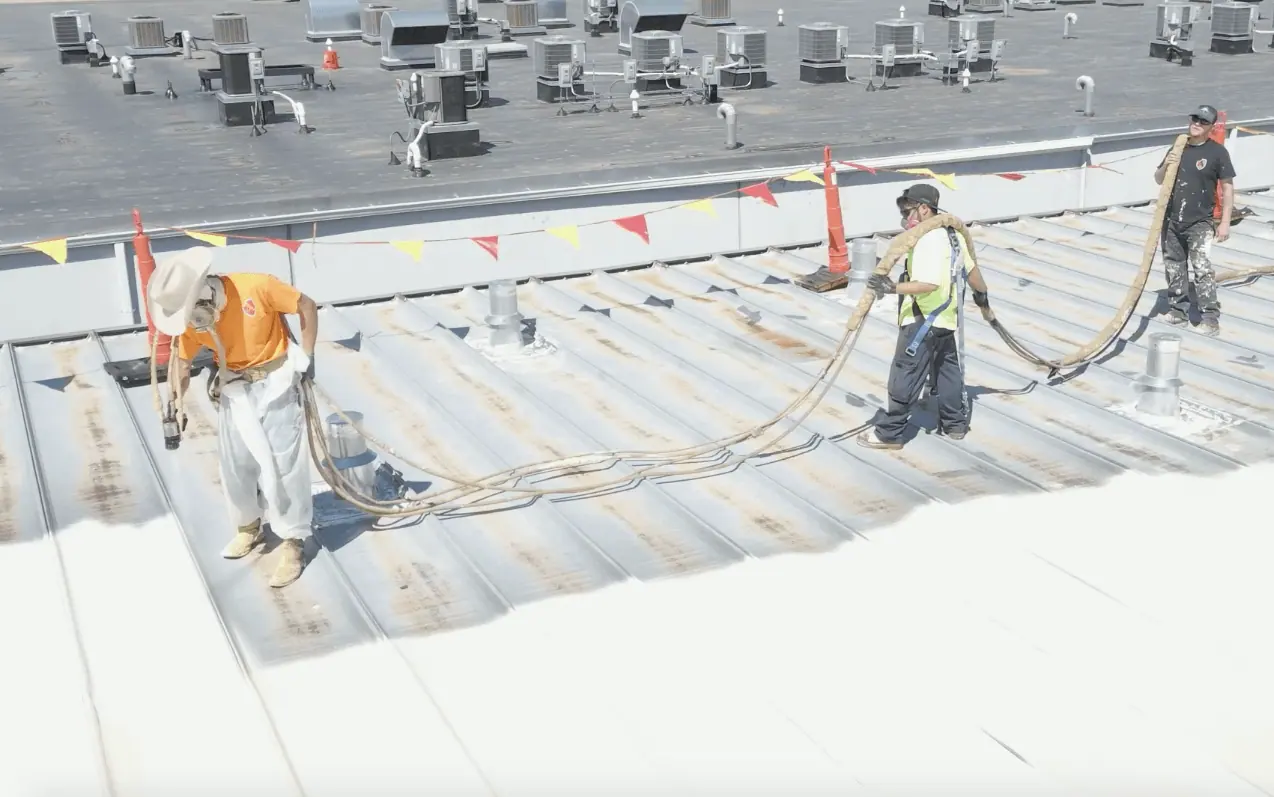
SPF installation requires specific ambient temperature and humidity conditions: substrate temperature above 50°F and rising, relative humidity below 85%, and no precipitation forecast within the installation window. Oklahoma's spring and fall weather variability, the same storm systems that produce tornado-alley hail, creates installation scheduling challenges that we plan around. SPF is not installed in Oklahoma City during the most active storm-risk periods (April-May) unless weather windows are confirmed in advance.
Summer installation in OKC requires early-morning starts and completion of the day's spray area before surface temperatures exceed 120°F. High substrate temperatures accelerate the foam's cure reaction and can produce cell structure anomalies that reduce the foam's insulation value and surface uniformity. Our crews manage substrate temperature with shading equipment and water-misting protocols on July and August projects.
Frequently asked questions
Is SPF a good choice for Oklahoma City buildings given the hail risk?
SPF is a sound specification for OKC buildings where the seamless waterproofing and added insulation value align with the building's needs, provided the owner understands and plans for the post-hail topcoat inspection and repair discipline. We specify thicker topcoats than southern-market standard, include post-storm inspection in the maintenance program, and document the hail-dimpling behavior honestly at scope presentation. For buildings on active hail tracks in western Oklahoma County, the inspection and repair program is a real cost that should be in the capital plan.
How thick is the foam on a typical OKC SPF installation?
We specify a minimum 1.5 inches of closed-cell foam on OKC commercial applications, with 2.0 inches where the building needs to The foam provides structural support for the topcoat and the significant insulation value that makes SPF competitive with insulation-replacement alternatives. We calculate the required foam thickness based on the building's current R-value and the target insulation specification.
How long does an SPF system last in Oklahoma City?
The foam substrate, if protected by a maintained topcoat, has a demonstrated service life of 30+ years. The topcoat requires recoat at 10 to 15-year intervals to maintain UV protection over the foam, in Oklahoma's UV environment, topcoat recoat is a maintenance item, not a warranty failure. The economics of periodic recoat versus periodic membrane replacement favor SPF over the building's long hold period on qualifying buildings.
Next StepIs SPF right for your OKC commercial building?
We assess the substrate, model the insulation improvement, explain the hail-dimpling maintenance program honestly, and produce a written SPF scope with topcoat specification and post-storm maintenance plan.
Request an SPF Assessment →
Start with a roof walk.
Send the building address, roof concern, and timing. We will help define the next step.
Contact Us