
Airborne-Projectile Risk in Oklahoma's Tornado-Track Environment
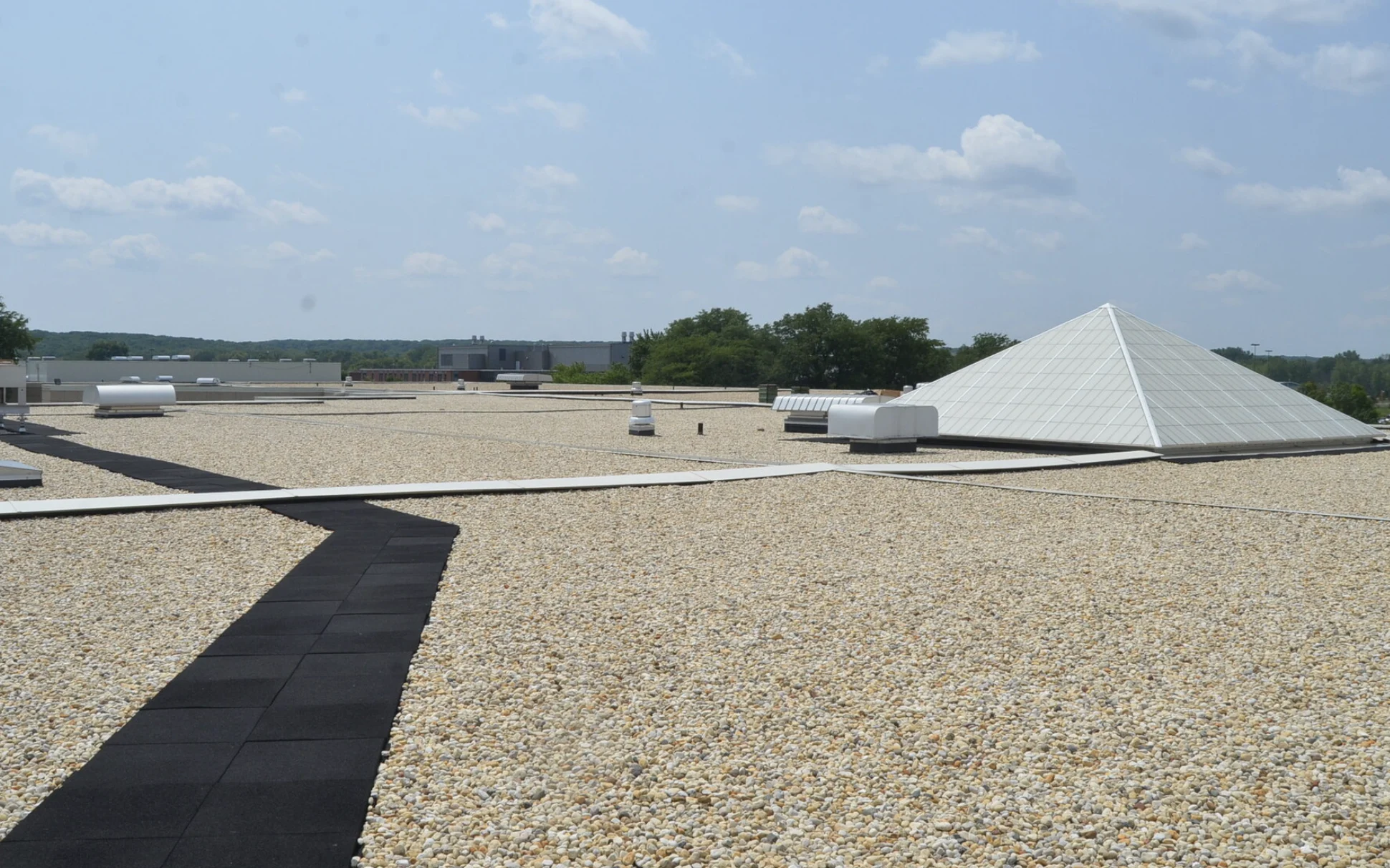
Ballast stone in a tornado-track event does not stay on the roof. Post-storm surveys after multiple OKC-area tornado events have documented ballast stone displaced hundreds of feet from original rooftop locations. The stones, typically three-quarter inch to one-and-a-half inch washed river gravel, become projectiles at tornado-track wind speeds, adding to the debris field that causes secondary damage to adjacent structures, vehicles, and people.
The practical implication for OKC building owners considering new ballasted installation is this: the system is not prohibited by Oklahoma's building code, but the tornado-alley debris risk is a real design consideration that does not exist at the same level in most other commercial roofing markets. For new construction in the OKC metro, mechanically attached or fully adhered single-ply systems eliminate this risk entirely and achieve comparable or superior wind-uplift performance through fastener design rather than ballast weight. We document this comparison in every scope where ballasted is under consideration.
Assessing and Replacing Aging OKC Ballasted Systems
Ballasted EPDM systems from the 1980s and 1990s are the primary ballasted inventory we assess in the OKC metro. These systems, 45-mil or 60-mil loose-laid EPDM under 10 to 12 inches of washed stone, require ballast removal to access the membrane for inspection. We remove ballast in sample areas at drains, parapets, and mid-field locations to expose the membrane for visual inspection and moisture core pulls.
Common findings on OKC legacy ballasted systems: EPDM membrane that has reached the end of its oxidation life and is brittle at seams and flashings, ballast stone redistributed by decades of wind events and foot traffic leaving some areas below the minimum coverage weight, drains partially buried under shifted stone and functioning below design capacity, and parapet flashings that have separated from the wall. The assessment findings drive the replacement scope.
Ballast removal before replacement is a cost and schedule item that must be in the scope from the start. Stone removal on a 100,000-square-foot OKC warehouse roof adds meaningful cost and schedule time, we include the ballast removal sequence, disposal cost estimate, and structural assessment in every ballasted-replacement scope we write.
Replacement System Selection After Ballasted Removal
When we replace an OKC ballasted system, the replacement specification is a mechanically attached or fully adhered single-ply system, not a new ballasted system except in the most unusual circumstances. The replacement system eliminates the airborne-projectile concern, resets the insulation to current Oklahoma energy code R-value requirements, and qualifies for a 20-year NDL manufacturer warranty and FM 4470 or UL 2218 impact ratings that the legacy ballasted system could never provide.
The wind-uplift design on the replacement system accounts for the building's actual exposure category and geometry under ASCE 7-22, the same calculation we run on every OKC single-ply installation. For buildings in open-terrain sites in western Oklahoma County or on elevated sites near Will Rogers World Airport, the corner-zone fastener patterns are substantially denser than a sheltered urban site, and the edge metal is FM-rated to ANSI/SPRI ES-1 standards.
Frequently asked questions
Why does ballasted roofing raise special concerns in Oklahoma City?
Two reasons. First, the structural load, 10 to 12 pounds per square foot, rules out most OKC buildings built on light-gauge metal deck in the 1970s and 1980s for new ballasted installation without a structural engineering review. Second, in a tornado-track event, loose ballast stone becomes airborne debris. Oklahoma City has sustained three EF-5 tornadoes. We raise both concerns with any building owner considering new ballasted installation in this market.
My OKC building has existing ballasted EPDM. Is replacement urgent?
It depends on the membrane condition and age. We remove ballast in sample areas, pull moisture cores, and assess the membrane at seams, flashings, and drains. A 1985 ballasted EPDM that is still watertight on core pulls may have some remaining life, but it carries no warranty, no impact-resistance documentation, and no wind-uplift documentation. For building owners planning capital decisions, refinancing, or insurance renewal, the lack of documentation is a practical problem regardless of the membrane's immediate waterproofing status.
Can the existing ballast stone be reused on my OKC replacement project?
We do not reuse ballast on replacement projects in the OKC metro. The replacement system is mechanically attached or fully adhered single-ply, not a new ballasted system. The existing stone is removed, classified as construction waste, and disposed of appropriately. The cost of ballast removal and disposal is in the project scope from the start.
Does removing ballast affect the structural framing?
Removing 10 to 12 pounds per square foot of dead load from the roof framing reduces the gravity load on the structure. On buildings where the original structural design was marginal, that load reduction is a benefit. The replacement single-ply system adds minimal dead load. We note the load change to the building owner and, where warranted, include a structural framing condition review as part of the assessment scope.
Next StepBallasted system on an OKC commercial building?
We remove sample ballast, pull cores, assess membrane and drain condition, and produce a written replacement scope with ballast removal sequencing, disposal cost estimate, and structural load documentation.
Request a Ballasted Roof Assessment →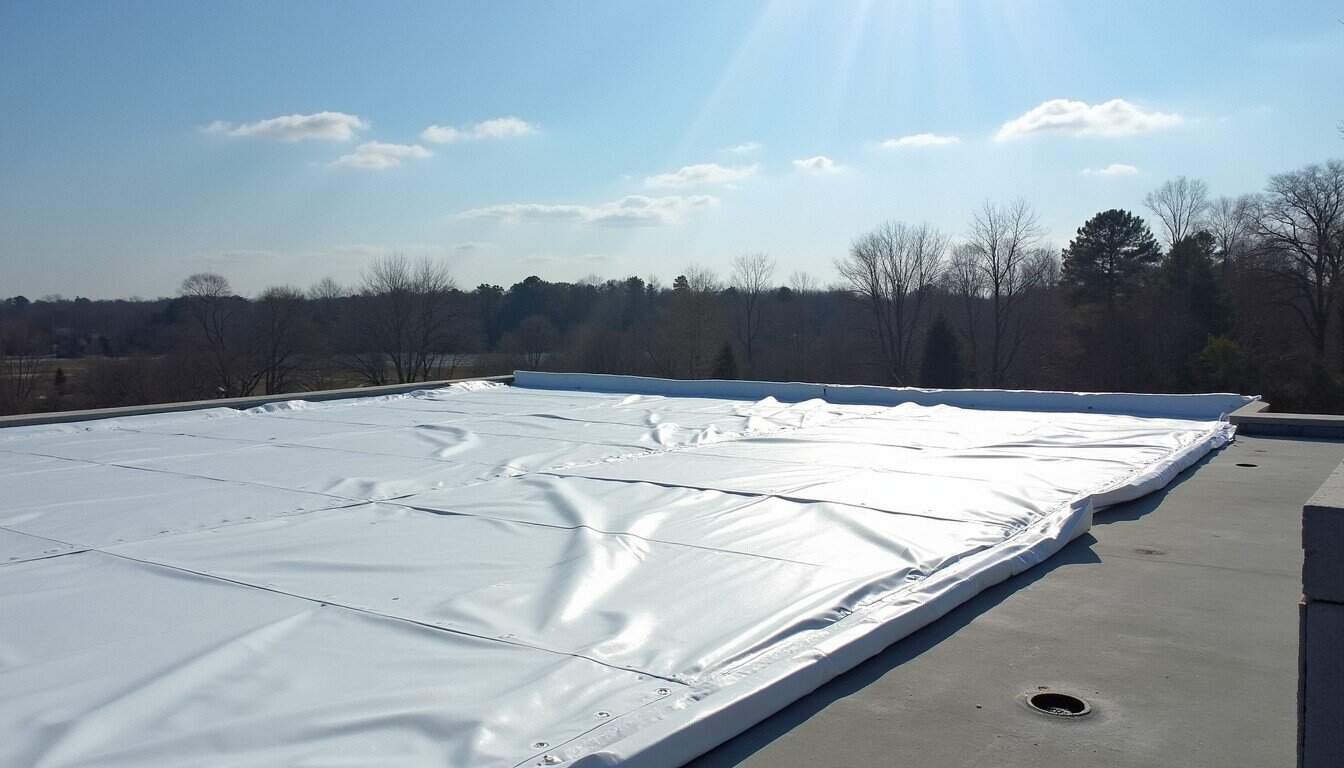
Start with a roof walk.
Send the building address, roof concern, and timing. We will help define the next step.
Contact Us