
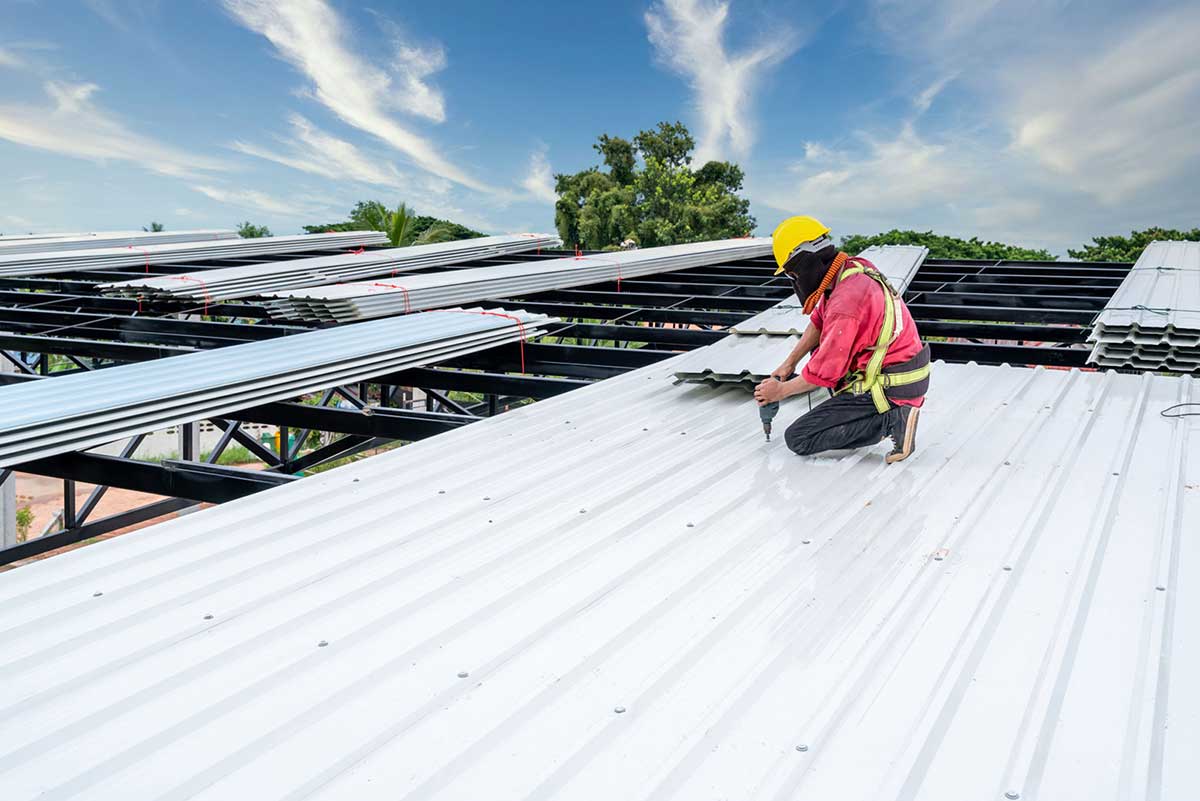
Wind Storm Damage Roof Insurance Claims in Oklahoma City, OK.
Straight-Line Wind and Severe Thunderstorm Exposure in OKC
Oklahoma City’s spring severe-weather season, generally March through June, brings frequent severe thunderstorm activity with sustained and gusting straight-line winds capable of displacing membrane, edge metal, and rooftop equipment. Suburban and open-terrain buildings, distribution centers and industrial buildings near Will Rogers World Airport, energy-sector campuses along the NW Expressway and N Western Avenue corridors, sit in more exposed terrain categories than tightly built downtown blocks, which affects both the wind pressures a roof actually experiences and how a wind-uplift claim gets evaluated.
Tornadic Activity and Commercial Roofs
The Oklahoma City metro’s position within Tornado Alley means tornadic activity is a real, if less frequent, part of the same spring storm systems that produce straight-line wind and hail. Most wind-related commercial roof claims in the metro come from the broader straight-line wind field of a storm system rather than a direct tornado path across a given building, but roofs near a storm’s path can see significant uplift and debris damage even without a direct hit. We document wind damage based on what the roof actually shows, displacement pattern, fastener pull-through, membrane tears, rather than assumptions about which specific weather feature caused it.
Roof-Deck Damage Patterns from Wind-Driven Debris
Wind-driven debris is one of the more overlooked damage sources in an OKC wind claim. Loose gravel, tree limbs, and displaced equipment from a neighboring roof can puncture a membrane, dent metal panels, or clog drains and scuppers, which then causes ponding that compounds the original damage over the following weeks. We inspect drains and low points specifically for debris-caused blockage, since ponding water damage that develops after a storm can otherwise be mistaken for an unrelated maintenance issue rather than storm-caused.
Documenting a Wind Claim
Our wind damage documentation covers membrane displacement or blow-off at laps, seams, and edge metal; parapet coping and flashing movement; equipment curb and duct damage; and drain or scupper obstruction from debris. We distinguish wind-related displacement from an installation defect where possible, since that distinction is often central to whether a carrier treats a claim as a covered weather event. We're your roofing contractor, not a public adjuster, we document and substantiate the roof damage so you and your adjuster work from an accurate scope.
Wind & Storm Damage Roof Claim Questions
What does wind damage to a commercial roof look like?
Common signs include lifted or torn membrane at seams and edges, displaced or missing edge metal and coping, dented or torn rooftop equipment curbs, and debris punctures. Some wind damage, particularly at fasteners below the membrane surface, isn’t visible without a close inspection.
Is roof damage covered even if a tornado didn’t directly hit my building?
Coverage depends on your specific policy language, but wind damage from the broader storm system, including straight-line winds accompanying a tornadic event, is generally evaluated the same as any other wind damage claim: based on the documented condition of the roof, not on how close a tornado track came.
How is wind damage different from hail damage in a claim?
Wind damage typically shows up as displacement, tearing, or uplift at seams, edges, and flashings, while hail damage shows up as impact impressions across the membrane field. A single storm event can produce both, and we document each separately since carriers often evaluate them under different claim criteria.
What if the wind damage is only visible from a drone inspection?
Some displacement, especially at parapet tops or tall rooftop equipment, is difficult or unsafe to inspect at close range. We use drone inspection to capture that documentation when it’s the safer or more complete option, and it becomes part of the same written report.
Will you meet with the insurance adjuster for the wind inspection?
We're your roofing contractor, not a public adjuster, we document and substantiate the roof damage so you and your adjuster work from an accurate scope.
Start with a roof walk.
Send the building address, roof concern, and timing. We will help define the next step.
Contact Us