
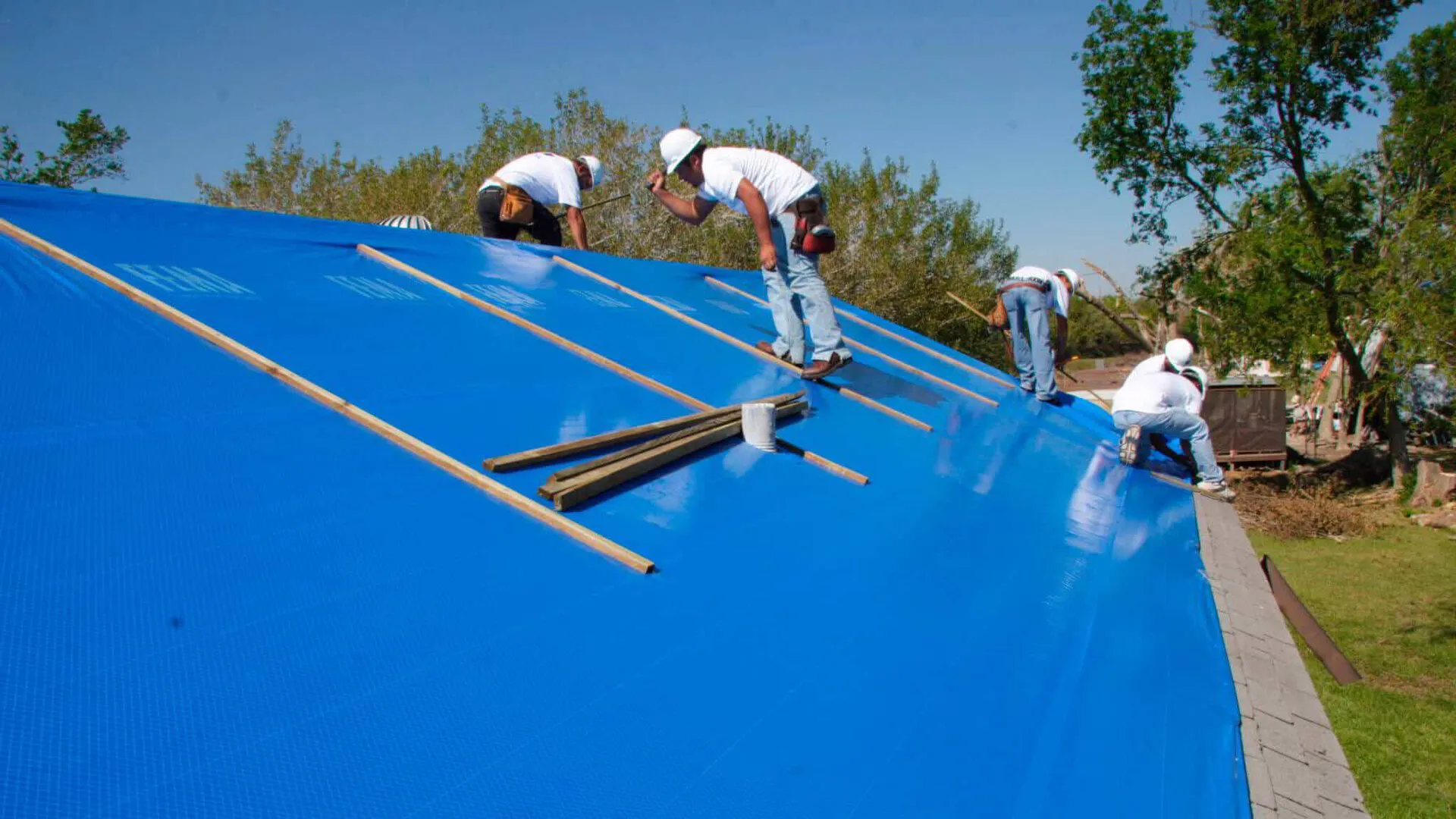
Storm Damage Roof Repair in Oklahoma City
After a hail, wind, or ice event, the first priority on a commercial low-slope roof is stopping active water entry, a temporary dry-in over a torn membrane or displaced flashing can typically be deployed within 24-48 hours of a major storm in the Oklahoma City metro. That temporary protection buys time for a full damage assessment without the interior of the building taking on additional water damage while the repair scope and any insurance documentation are finalized.
Once the roof is dry, the repair scope gets built from what the damage assessment actually shows: torn or displaced membrane at seams and edges, damaged flashing and edge metal, punctured sections from wind-driven debris, and any hail impact across the field. On buildings along the NW Expressway and Memorial Road corridors and the distribution and industrial roofs near I-35 and I-40, that assessment covers the full roof field rather than only the section with the most obvious damage, since storm damage frequently extends beyond the area where a leak first shows up inside the building.
If the repair is being paid through an insurance claim, we document the pre-repair condition with dated photography and measurements before any work begins, so the record of storm damage exists independent of the repair itself. See our commercial roof insurance claim documentation page for how that assessment supports a claim, and our hail damage and wind & storm damage claim pages for damage-specific detail.
Storm Damage Roof Repair Questions
How do you document hail damage on a commercial roof?
Our hail damage assessment includes GPS-tagged photographs of impact locations across the full roof surface, impact density measurement per section, membrane sample cuts at impact locations where an adjuster requires physical evidence, and a written assessment documenting the impact pattern and estimated hail size based on impression geometry. This documentation follows the format commercial property adjusters typically use to review hail claims.
What does hail damage look like on a TPO or PVC commercial roof?
On TPO and PVC membranes, moderate hail (roughly 1" diameter and above) leaves impact impressions in the membrane surface, circular depressions where the hail compressed the membrane and underlying insulation. These impressions are often not visible without close-range inspection in low-angle light on a dry surface. The impact point becomes a stress concentration location that can accelerate future seam and surface failures. Our documentation maps impact density across the full roof.
Can you work directly with my insurance company or adjuster?
We meet the adjuster on the roof and walk them through our documented findings, and we can prepare additional documentation if the adjuster requests it. We're your roofing contractor, not a public adjuster, we document and substantiate the roof damage so you and your adjuster work from an accurate scope, not negotiate the claim or represent you to the carrier.
What if the insurance settlement doesn't cover the full repair cost?
When an initial settlement comes back below the documented repair cost, we can re-inspect and prepare supplemental documentation, additional photography, measurements, or a written clarification of a damage pattern, for you or your adjuster to bring back into the claim. We can't guarantee any particular settlement outcome.
How quickly can you respond after a major storm event?
We prioritize post-storm response in Oklahoma City. Emergency dry-in and temporary protection can typically be deployed within 24-48 hours of a major event to stop active leaking while the full damage assessment is completed. A written damage assessment is typically delivered within 3-5 business days of the initial site visit.
Start with a roof walk.
Send the building address, roof concern, and timing. We will help define the next step.
Contact Us