
EPDM and TPO Expansion Joint Cover Systems
EPDM bellows covers are the most common system on Oklahoma City commercial buildings constructed through the 1990s. The bellows, a flexible loop of EPDM that spans the joint opening, accommodates horizontal movement by extending or compressing. The cover is mechanically terminated on both sides of the joint with metal bars embedded in the roofing membrane. When the termination bars separate from the membrane or the bellows tears, often under wind uplift during Oklahoma storm events, the joint leaks.
TPO heat-weldable expansion joint covers, available from Carlisle, Johns Manville, and other TPO manufacturers, are the current standard specification for buildings on TPO membrane systems. The cover is heat-welded to the field membrane on both sides of the joint, with a pre-formed TPO bellows spanning the gap. Because the cover is welded rather than mechanically fastened, it integrates with the membrane cleanly and eliminates the termination bar as a failure point. On OKC buildings where we are replacing an EPDM bellows cover on an existing TPO roof, we typically specify the TPO heat-weldable cover so the full assembly is one membrane type.
For joints on buildings with existing modified bitumen or built-up roof systems, common on the older commercial and institutional inventory in Capitol Hill and the historic Automobile Alley corridor, we use a preformed expansion joint cover in a modified-bitumen-compatible formulation, torched or hot-mopped into the surrounding membrane. These systems require more careful movement range estimation, because if the cover is undersized for the actual seasonal movement, it tears at the center.
Anticipating Oklahoma Red Clay Movement
Oklahoma red clay and the heaving Permian-era soils that underlie much of Oklahoma County have plasticity indices that rank among the highest of any commercial market in the United States. The clay swells and shrinks more dramatically with moisture change than the expansive soils of most other Sunbelt cities. Foundation movement from clay shrink-swell cycles is documented by the Oklahoma Department of Transportation as a primary cause of infrastructure distress on state highways and county roads across the metro, and it produces the same structural stress in commercial building foundations.
We assess clay movement risk on every expansion joint repair project by reviewing the building's foundation type, the building's moisture management history, and the visible evidence of differential movement in the existing joint, gaps that are wider on one side than the other, covers that show compression on one face and tension on the opposite face, or adjacent masonry cracking patterns that indicate which direction the structure has been moving. On slab-on-grade buildings, which constitute a large share of OKC's light-industrial and retail commercial stock, we pay particular attention to whether the joint width is consistent with its original design specification or has changed through differential settlement.
For buildings where we determine that Oklahoma clay movement is the primary driver of joint failure, rather than simple age degradation of the cover material, we specify a cover system with bellows depth and width that accommodates the measured seasonal movement range plus a safety margin. We also discuss with the building owner whether improving site drainage around the building's perimeter would reduce soil moisture variation that drives the movement, because a drainage improvement that stabilizes soil moisture can be more cost-effective than periodic cover replacement on a high-movement site.
When Joints Need Full Replacement vs. Cover Repair
Cover repair, patching a torn bellows, re-terminating a pulled termination bar, or reseating a displaced cover, is appropriate when the failure is isolated and the cover material still has adequate flexibility and thickness to perform. We probe the EPDM or TPO cover material at the repair area and at representative points along the joint to verify the material has not degraded beyond the point where it can hold a patch.
Full cover replacement is indicated when the bellows material has hardened or cracked along its full length, when the termination bars have corroded or pulled out of the membrane over more than 30% of the joint length, or when the joint width has changed significantly from its original specification through differential foundation settlement. On Oklahoma City buildings near the North Canadian River flood plain and on slab-on-grade buildings in the industrial areas west of I-44, differential settlement is a documented cause of joint width change, the original cover specification no longer fits the actual joint geometry.
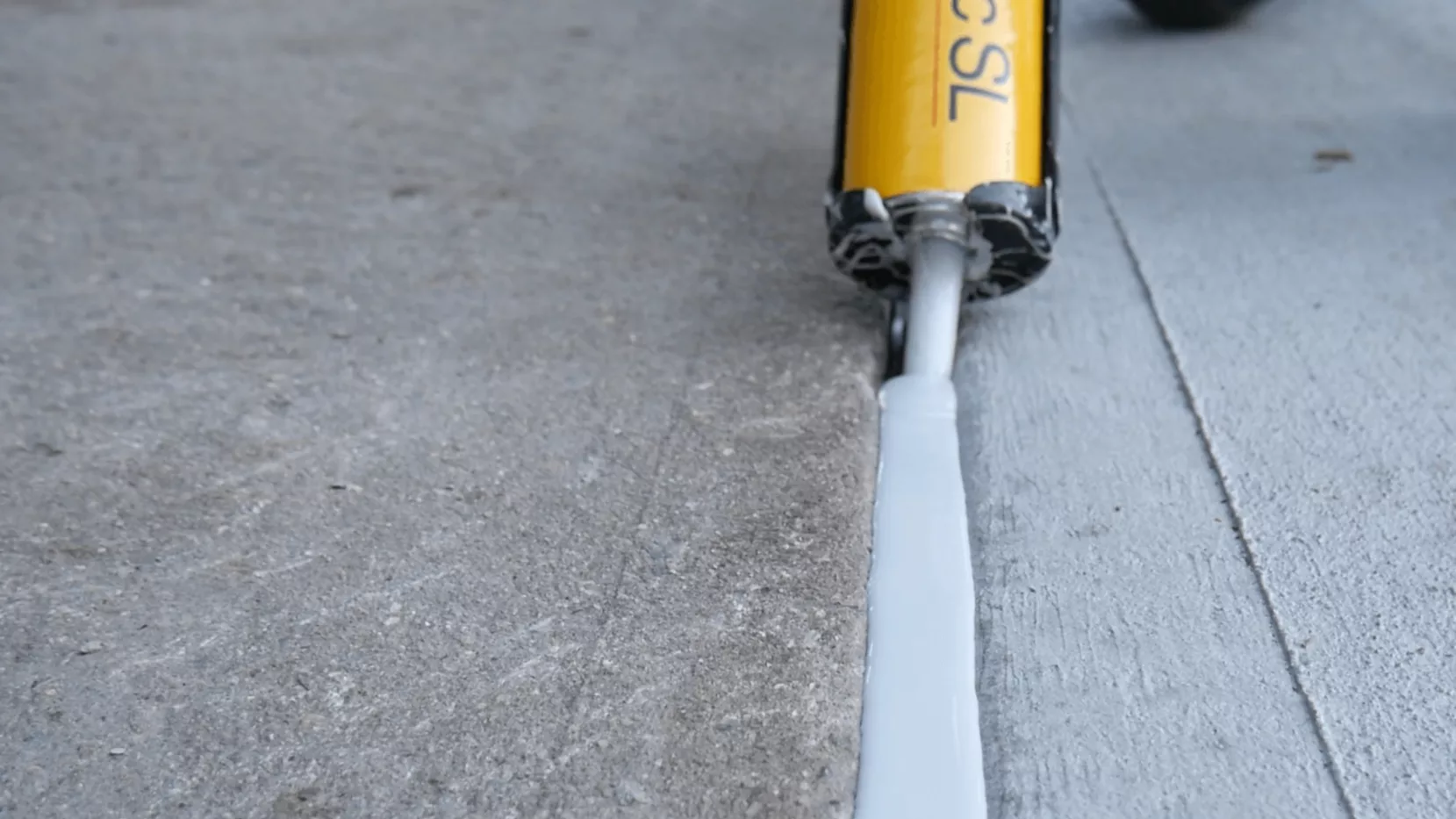
We do not fill expansion joints. A filled joint becomes a cracked membrane, and the crack opens at the structural joint location regardless of the material used to fill it. We regularly encounter buildings on our OKC inspection routes where a prior contractor applied urethane caulk or spray polyurethane foam into an expansion joint, the fill fails within one or two seasons and leaves the joint in worse condition than before, because the fill material bonded to both sides of the joint and tore the adjacent membrane when it failed under movement. The repair for a filled joint is to remove the fill, restore the joint gap to its original width, and install a proper bellows cover system.
Frequently asked questions
How do I know if a crack in my roof membrane is at an expansion joint or just a field membrane crack?
Field membrane cracks follow random paths, stress points, seam lines, areas of settlement. Expansion joint failures follow the joint line exactly, because the crack propagates along the structural joint below. If you have a linear crack that runs parallel to a visible building joint or a break in the roofline, it is almost certainly at an expansion joint. Oklahoma City buildings with red clay movement issues often show this pattern at multiple joints simultaneously.
My building was built in 1992 and I do not think it has expansion joints. Is that possible?
Yes. Expansion joint requirements depend on building length, material, and structural system. Some OKC commercial buildings from that era were constructed without roofing expansion joints and developed field membrane cracks at structural transitions over time as clay movement accumulated. If your building has recurring cracks at the same locations, those locations may need expansion joint covers installed retroactively.
Can expansion joint covers be installed without a full reroof?
Yes, in most cases. The cover system is terminated into the existing membrane with mechanical bars and sealant, or heat-welded if the existing membrane is TPO or a compatible single-ply. We require that the membrane on both sides of the joint be in sound condition, installing a bellows cover over deteriorated membrane just relocates the failure point.
How long do replacement expansion joint covers last on OKC buildings?
EPDM bellows covers in good condition last 15 to 20 years before the material degrades to where replacement is warranted. TPO heat-weldable covers on new TPO systems typically match the surrounding membrane life of 20 years. Oklahoma City buildings on high-movement red clay sites may see shorter cover life because the seasonal movement cycles are more numerous and more severe than on stable soil, we factor this into our cover specification for buildings where movement is a documented primary failure driver.
Next StepRecurring crack at the same location on your OKC roof?
That crack is likely at a structural joint. We assess the movement range, specify the correct cover system, and install a bellows detail that accommodates what the building actually does, not what it was designed to do thirty years ago.
Request an Expansion Joint Assessment →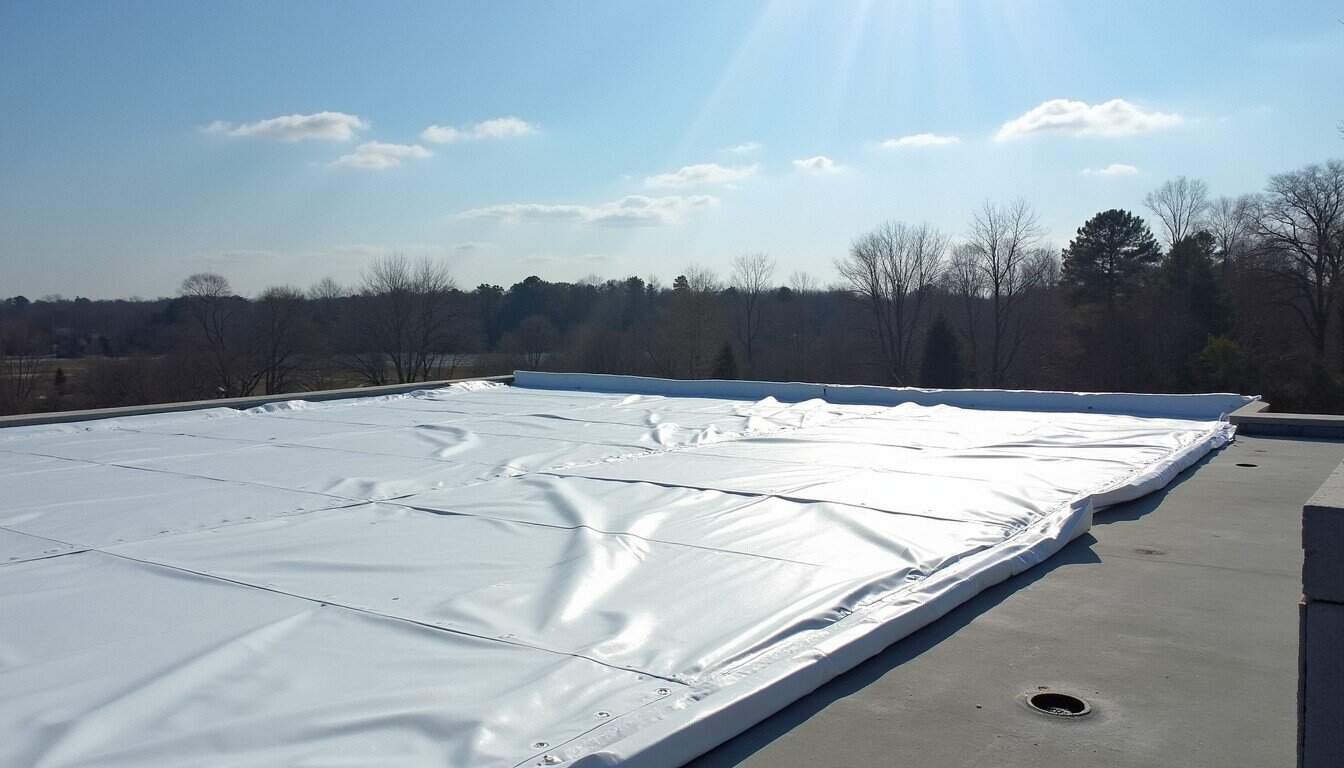
Start with a roof walk.
Send the building address, roof concern, and timing. We will help define the next step.
Contact Us