
60-mil EPDM Specifications and Attachment Methods
60-mil is the current commercial standard for new EPDM installations. The original 45-mil systems prevalent across OKC's 1980s and 1990s industrial inventory are no longer specified for new commercial work, the additional thickness provides meaningful improvement in puncture resistance, seam durability, and overall system longevity. Most 60-mil EPDM systems qualify for 20-year manufacturer no-dollar-limit warranty coverage with appropriate installation documentation.
Mechanically attached EPDM is the standard configuration for most OKC industrial applications. The fastener pattern is designed against the building's ASCE 7-22 wind-uplift zone, field, perimeter, and corner, and against the building's exposure category. Buildings in open terrain west of I-44 or in the Canadian County growth corridor, where surrounding development does not provide wind shelter, typically require Exposure C fastener densities at perimeter and corner zones. The 2019 spring hail events across western Oklahoma County demonstrated the consequence of perimeter zones with under-specified fastener patterns, membrane edge blow-off at building corners was the dominant failure mode on roofs that otherwise survived the hail impact.
Fully adhered EPDM bonds the membrane to the substrate with a contact adhesive applied to both surfaces. The fully adhered configuration eliminates membrane flutter under wind load, improves the aesthetic finish, and is required on substrates where additional mechanical penetrations are prohibited. Medical facility settings, the OU Health Sciences Center campus buildings and the INTEGRIS campus facilities, frequently specify fully adhered systems to avoid hot-air welding operations and to minimize foot-traffic puncture risk over fastener plates.
End-of-Life EPDM Replacement on OKC Industrial Inventory
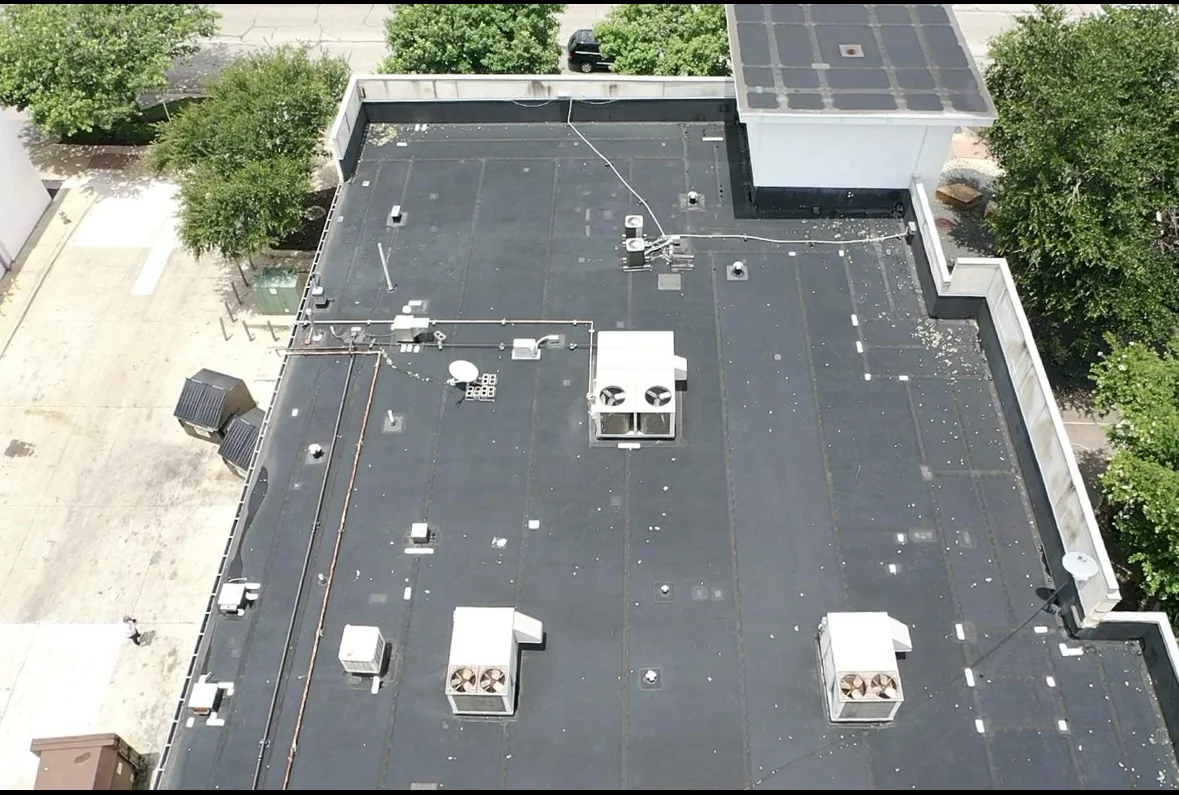
The practical condition of 1990s 45-mil EPDM at the end of its service life in Oklahoma City: factory lap seams have lost adhesive bond from repeated thermal cycling through the OKC temperature range, the field membrane shows surface checking and brittleness, and the lap sealant, which was already the weakest component of original EPDM systems, has cracked open in multiple locations. When we pull cores on these roofs, we frequently find wet insulation at seam locations and around drains. A coating over this system is not appropriate. A recover is possible only if cores confirm dry insulation across the majority of the field. Full tear-off and replacement is the scope on most of this inventory.
Our replacement scope on OKC industrial EPDM: full tear-off staged in 5,000 to 10,000 sq ft sections with same-day dry-in per section, moisture survey on existing polyiso insulation with targeted insulation replacement at wet areas only, new 60-mil EPDM or TPO installation based on owner preference and building use, and manufacturer warranty closeout with a field inspection. The recover-vs-replace choice for the insulation depends entirely on core results, we do not default to full insulation replacement if the existing polyiso is still dry and dimensionally stable.
Some OKC industrial building owners choose TPO over new EPDM for the replacement membrane. The reasons are straightforward: heat-welded TPO seams install faster than adhesive-bonded EPDM seams on large-footprint roofs, TPO provides better cool-roof reflectivity that supports Oklahoma energy code compliance, and equivalent 20-year warranty terms are available. EPDM's advantage is a somewhat lower material cost and a proven service history in this specific climate zone. Both membranes are appropriate, the building's use, the owner's maintenance program, and the prior system's performance history all factor into the recommendation.
EPDM in Medical and Institutional Applications
EPDM is frequently the specified membrane on healthcare buildings in the OKC metro because it tolerates a wider range of exhaust chemistry than standard TPO, particularly on buildings with medical gas vents, sterilant exhaust, and laboratory-fume discharge that concentrate on the roof surface. The OU Health Sciences Center campus and several of the INTEGRIS and Mercy system facilities have EPDM specifications on buildings where chemical exhaust exposure is a documented concern.
Fully adhered EPDM avoids hot-air welding and open-flame operations entirely, which simplifies hot-work permitting processes in active healthcare environments. For buildings where the facility manager has restricted any flame or heat-welding work during occupied hours, fully adhered EPDM is frequently the membrane configuration that allows the project to proceed without a complex phased hot-work coordination plan.
Frequently asked questions
Can an aging EPDM roof in Oklahoma City be coated instead of replaced?
On an EPDM roof with dry insulation confirmed by cores, a serviceable membrane, and no systemic seam failure, a silicone coating over properly primed EPDM can extend service life with a manufacturer warranty. On 1990s 45-mil EPDM with brittle lap sealant, surface checking, and degraded adhesive seams, which describes the majority of that vintage in OKC's industrial corridors, coating is not a durable option. The coating fails at the seam locations within two to three years. We core-pull and assess every aging EPDM roof before recommending coating versus replacement.
How do you seal EPDM seams, is it the same as TPO welding?
No. EPDM is a thermoset membrane, it cannot be heat-welded. Seams are bonded with EPDM-compatible lap adhesive applied to both membrane surfaces and pressed with a seam roller, then reinforced with factory-applied seam tape. This is a completely different process from TPO or PVC heat welding, and it requires trained installers who know EPDM adhesive flash times and roller technique. We do not cross-train TPO crews for EPDM seaming work.
What warranty is available on a new 60-mil EPDM installation in Oklahoma City?
20-year no-dollar-limit manufacturer warranty is available from major EPDM membrane manufacturers on qualifying 60-mil mechanically attached or fully adhered systems. Qualifying conditions include proper substrate preparation, manufacturer-specified fastener pattern (designed per ASCE 7-22 for the building's actual wind zone), manufacturer-approved flashing details, and a documented installation closeout with field inspection. We carry credentials with major EPDM manufacturers and close out every project with the manufacturer inspection before warranty issuance.
Does EPDM perform well under Oklahoma's temperature extremes?
Yes, the broad temperature tolerance of EPDM is one of its genuine performance advantages in the OKC climate zone. EPDM maintains flexibility at very low temperatures, which was relevant during the extended freeze events of the last decade. At the high end, EPDM handles sustained surface temperatures above 160°F without the plasticizer migration or surface cracking that affect some other membrane formulations under sustained heat.
Next StepRequest a roof report
Get in touch →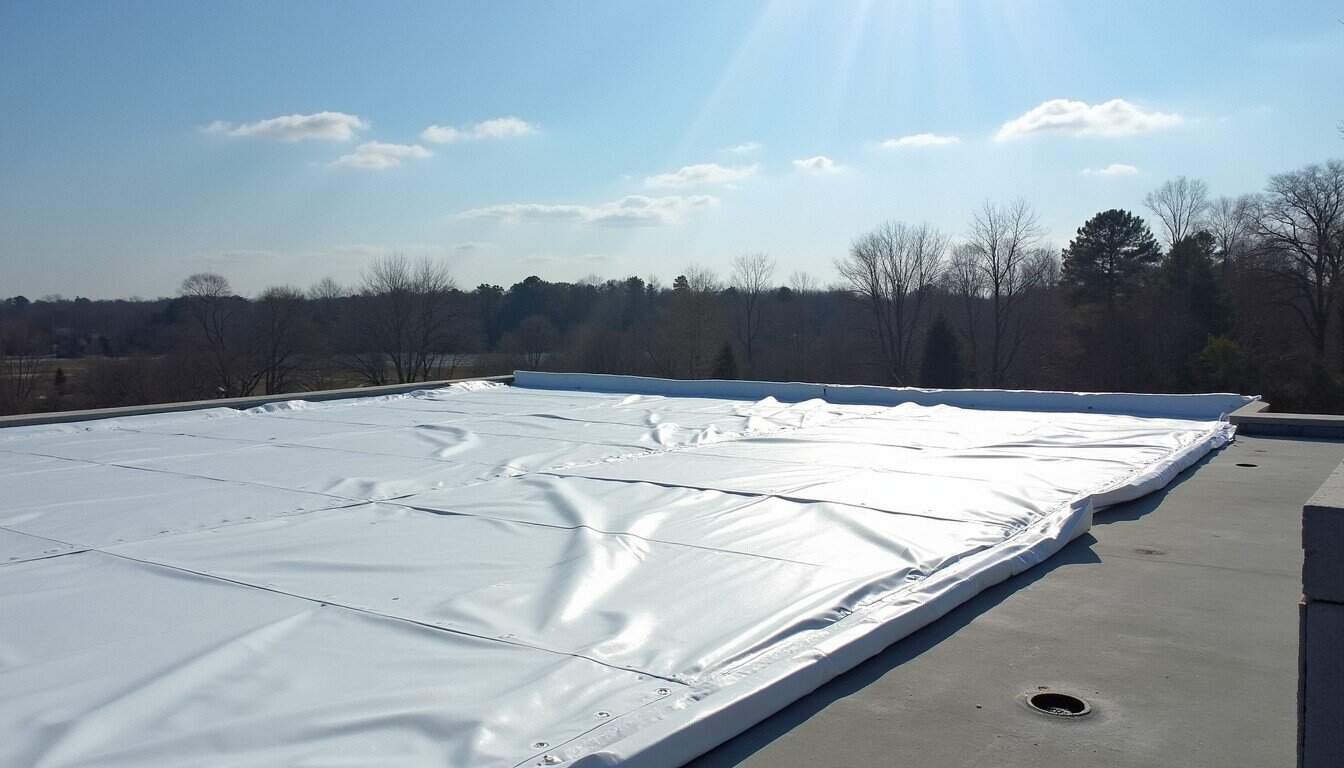
Start with a roof walk.
Send the building address, roof concern, and timing. We will help define the next step.
Contact Us