Oklahoma City IR Scanning Windows
Optimal OKC IR conditions: October through April, with November through February producing the strongest differentials. Daytime temperatures still generate sufficient solar loading on the roof surface, and evening temperatures drop quickly enough in OKC's continental climate to create a clear thermal contrast between wet and dry insulation zones. A December or January scan on a clear-day/cool-night cycle produces the most readable thermograms in this market.
Marginal OKC IR conditions: March and April are workable but variable, spring storm fronts can change cloud cover and surface moisture conditions rapidly. May through September is generally not recommended for reliable OKC moisture detection via IR. High dew points and slow cool-down produce ambiguous thermograms that are not a sound basis for capital decisions. Post-storm scans in this season, where the purpose is rapid damage assessment rather than moisture mapping, can be conducted but the findings should be confirmed with core sampling before any capital scope is finalized.
Oklahoma-specific note: Many OKC commercial buildings constructed or re-roofed between 2005 and 2020 have white or light-gray TPO membranes for energy code compliance. These high-reflectance membranes absorb less solar energy during the day and therefore charge less relative to the underlying insulation, producing a weaker thermal differential in the thermogram. On highly reflective membranes, strategic core sampling at suspected zones often produces equivalent or better data at lower cost than an IR scan with a weak signal-to-noise ratio.
How We Use IR with Core Sampling on OKC Roofs
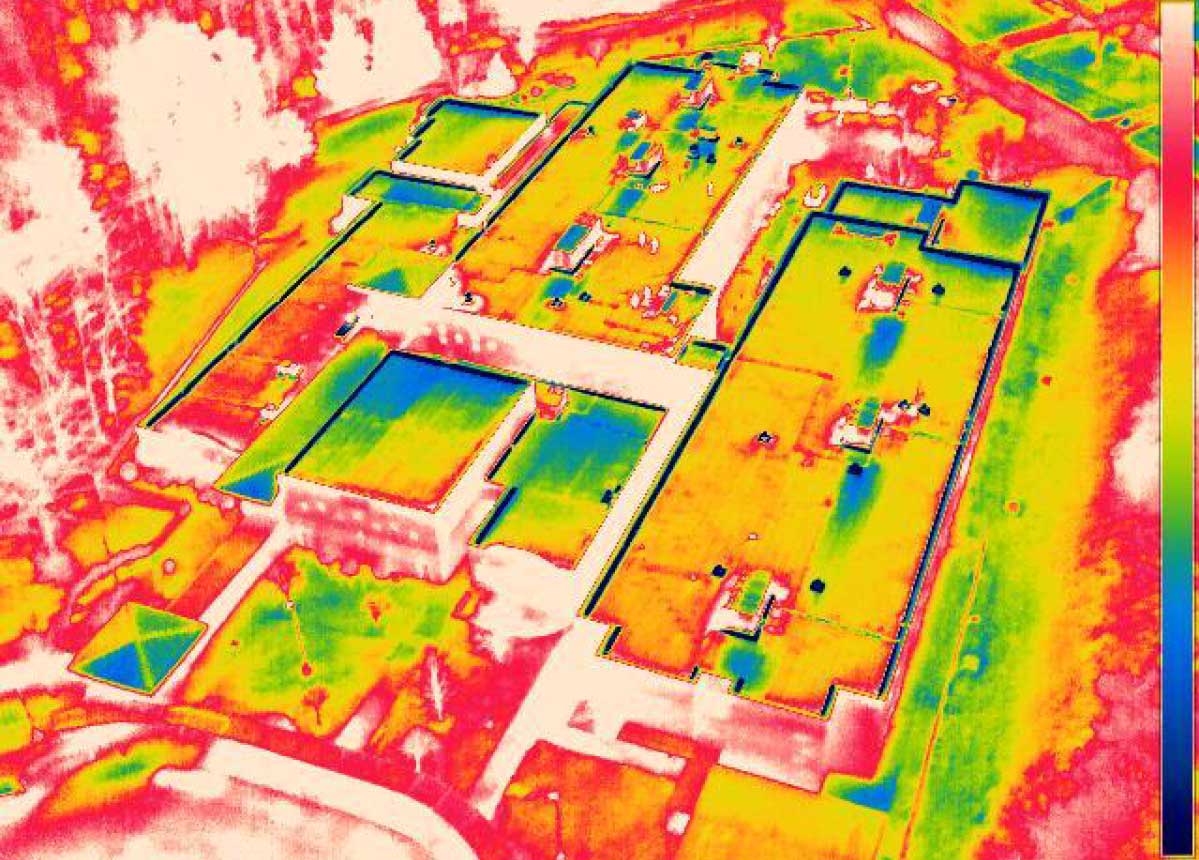
The IR scan produces a thermogram with warm anomaly zones marked as probable moisture locations. We pull cores at each significant anomaly zone to confirm the finding, dry, damp, or wet. We also pull cores at several presumed-dry zones identified in the thermogram to establish the baseline and confirm the IR read is accurate for this building's specific thermal mass and membrane type.
On large OKC roofs, the Tinker AFB-adjacent industrial buildings, the large medical campus buildings on the OU Health Sciences Center district, the big-box retail and warehouse buildings in the I-40 and Kilpatrick Turnpike corridors, IR combined with targeted core sampling typically covers the full roof area at lower total cost and disruption than a grid-density core survey alone. IR alone on a 150,000 sq ft building can survey the full area in one evening; achieving equivalent spatial coverage with cores alone would require 40-50 pulls. IR plus targeted cores achieves equivalent confidence at 15-25 pulls.
The combined deliverable is a moisture distribution map with each zone coded as confirmed-wet (core-verified), probable-wet (IR anomaly pending core confirmation), or dry (both IR and core clear). This three-level classification tells the owner where the confidence is high versus where it is inferred from the thermogram alone.
Equipment and Report Format
We use FLIR commercial-grade radiometric thermal cameras calibrated for roofing applications. Thermograms are captured at full radiometric resolution and delivered in the report alongside visible-light photographs of the same roof zone, so every anomaly in the thermogram corresponds to a visible-light photo showing the membrane surface condition at that location. For OKC buildings where the report will be used in an insurance claim or acquisition due diligence, we provide calibration documentation for the thermal imaging equipment.
The IR report is formatted as an addendum to the condition report, moisture survey findings integrate into the building's full condition record rather than sitting as a separate standalone document. Core-confirmation results are keyed to the same zone diagram used in every prior inspection, so the moisture findings are immediately comparable to the building's condition history.
Frequently asked questions
Can infrared scanning be done right after an OKC hail event?
It can be attempted, but the results are often unreliable in the immediate post-storm window because wet membrane surface from rain creates false-positive anomalies that are indistinguishable from wet-insulation signal. After a hail event, we recommend a visual condition assessment immediately for insurance documentation, with IR and core-confirmation survey conducted 4-6 weeks later once the membrane surface has dried and the moisture has had time to migrate into the insulation, which is when the IR anomalies become most readable.
Is infrared scanning required, or can we use only core sampling?
Core sampling without IR is appropriate for most OKC buildings, particularly smaller roofs under 40,000 sq ft, or buildings where prior inspection has identified probable moisture zones that targeted cores can confirm directly. IR adds the most value on large roofs where full spatial coverage via cores would be expensive and time-consuming, and where the Oklahoma scan-season conditions are favorable. We recommend based on your specific building, not as a default upgrade.
Does Oklahoma's high summer humidity affect IR accuracy?
Yes, materially. High dew points in July and August mean the roof surface retains ambient moisture that creates thermal noise in the thermogram, it is harder to distinguish genuine wet-insulation anomalies from surface moisture effects when ambient humidity is high. This is why we schedule OKC moisture surveys via IR in the October-April window wherever the capital planning timeline allows. Post-storm rapid assessments that cannot wait for optimal conditions are conducted with this limitation documented in the report findings.
What is the best time of year for IR scanning in Oklahoma City?
November through February produces the most reliable thermograms in OKC, clear daytime solar loading combined with fast evening temperature drop in Oklahoma's continental climate creates strong differential between wet and dry zones. October and March-April are workable. May through September is generally avoided for moisture-survey IR in this market due to humidity effects and slow evening cool-down.
Next StepSchedule IR moisture scanning for your Oklahoma City commercial roof.
We assess whether IR conditions are favorable for your building and timeline, then combine IR scanning with core sampling to produce a moisture distribution map you can make capital decisions from. Call 405-468-9218 or use the form.
Schedule IR Scanning →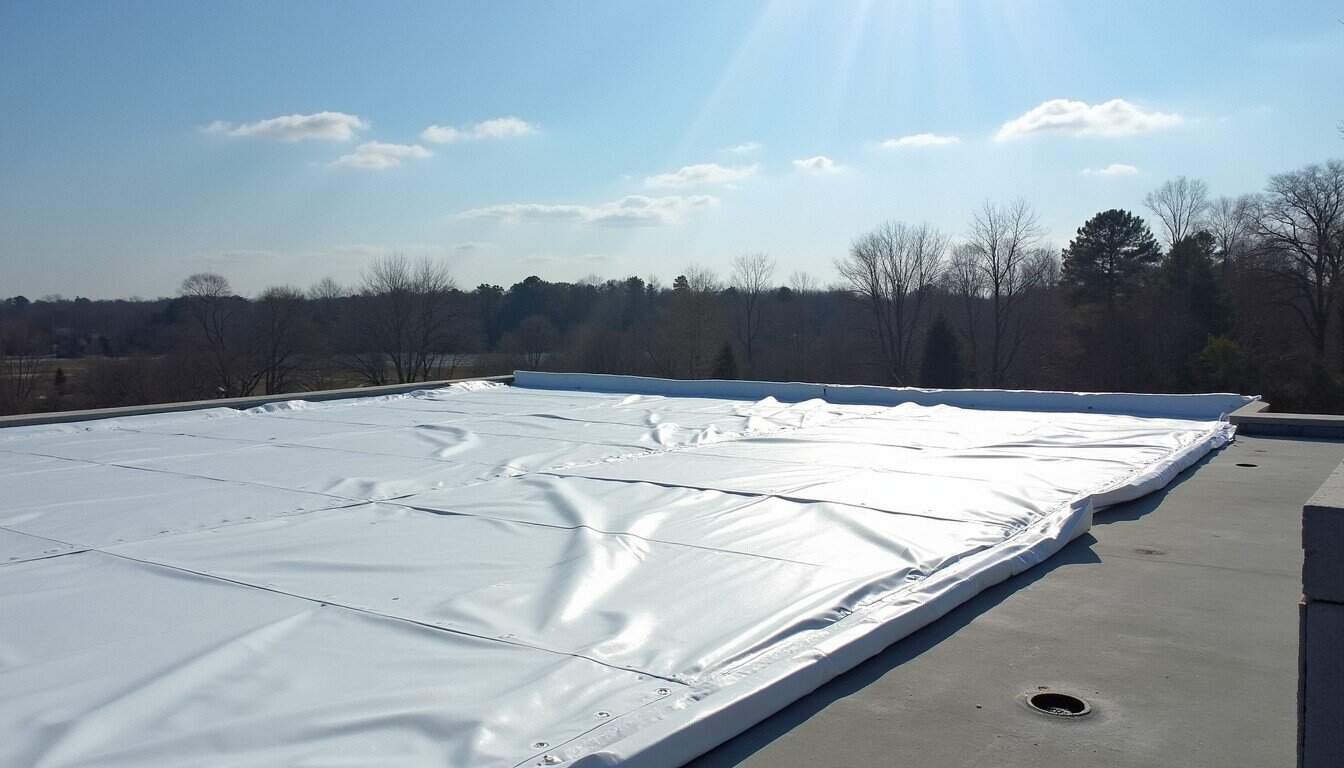
Start with a roof walk.
Send the building address, roof concern, and timing. We will help define the next step.
Contact Us