
Core Sampling Protocol
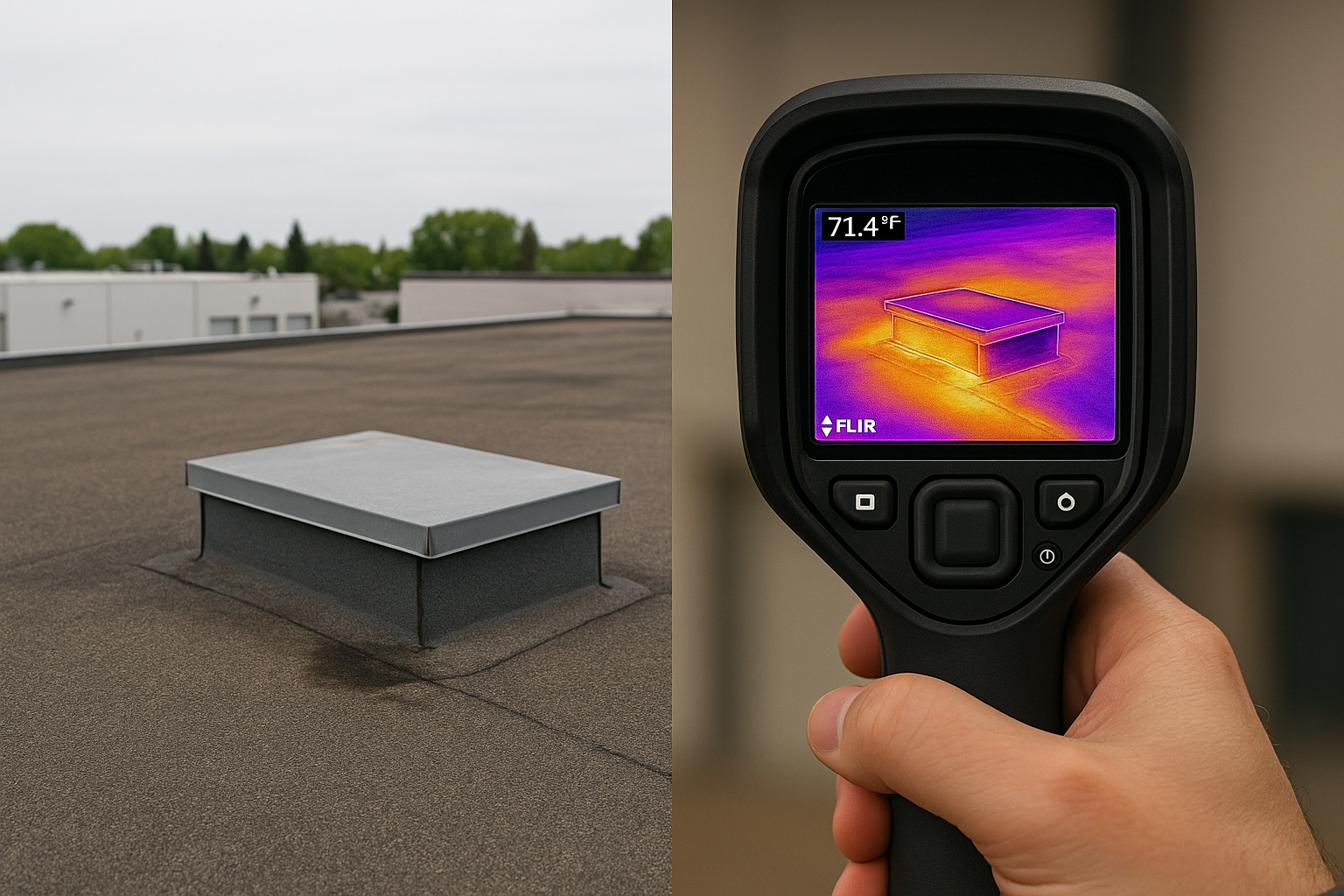
We pull cores with a 4-inch diameter core cutter at representative locations identified before the site visit by reviewing the existing inspection record, drain layout, documented hail impact zones, and building history. Each core pulls through the membrane and the full insulation stack to the deck surface. We record the number of plies for multi-ply systems, insulation type and thickness, condition of each layer, and whether the insulation is wet, damp, or dry by direct physical assessment.
Core density for OKC buildings: The statistical confidence of a moisture survey depends on the core count relative to roof area and suspected moisture distribution. For a 50,000 sq ft roof with no prior moisture data, we pull a minimum of 15-20 cores in a grid pattern plus targeted cores at high-probability locations, drains, parapet returns, documented hail-impact zones from the prior inspection. For a roof where the prior storm-damage documentation has identified specific suspect zones, we sample those zones at higher density and confirm with scattered cores in presumed-dry areas to establish the extent of moisture migration.
After pulling, each core location is repaired with membrane-matching material and resealed before we leave the site. Core locations are logged on the zone diagram by number so every future inspection can reference where each core was pulled and what it found. This longitudinal core record is particularly useful on OKC buildings that have been through multiple storm seasons, cores pulled before and after storm events can show whether hail impacts that did not immediately generate leaks are driving insulation moisture over time.
Moisture Distribution Mapping and Decision Thresholds
Core results are plotted on the zone diagram to produce a moisture distribution map. Wet cores, damp cores, and dry cores are marked distinctly. The spatial pattern matters: clustered moisture near parapet walls or drain clusters on OKC buildings often indicates years of incremental flashing failure; dispersed moisture across the field membrane more often indicates hail-impact infiltration affecting a wide zone from a single storm event.
The 25% threshold is the conventional recover-versus-replace decision point: if more than 25% of the roof area has wet or significantly damp insulation, recovering is not a defensible scope. The recover membrane manufacturer will not warrant a system installed over wet insulation, and the trapped moisture will continue degrading the deck below it. Below 25%, a selective-tear-off recover, wet areas torn off to deck, deck inspected and repaired, and only those areas receive new insulation before the recover membrane goes down, is a legitimate capital option that typically costs 40-60% of full replacement on OKC buildings in the relevant size range.
We present the decision analysis in writing with the moisture map and core data as supporting documentation. The recommendation is one of three: recover-option, full-replacement, or a staged approach where the most critical sections are replaced now and the remainder monitored with a defined escalation trigger.
Oklahoma Humidity and Its Effect on Moisture Survey Timing
Oklahoma's summer humidity profile affects when moisture surveys produce the most reliable results. High ambient humidity during July and August can make borderline-damp insulation cores read wetter than they actually are because ambient moisture content in the air affects the tactile and weight assessment. For buildings where the survey is supporting a recover-versus-replace decision, we prefer pulling cores in the spring (April-May) or fall (September-October) when Oklahoma ambient humidity is lower and core readings are more definitive.
For post-storm damage surveys where the purpose is insurance documentation rather than a capital scope decision, timing is driven by the claim process rather than optimal survey conditions, we pull cores as soon as access is available after a storm event, document the findings clearly, and note in the report the ambient conditions at the time of survey.
Frequently asked questions
Does core sampling damage the roof?
Minimally and temporarily. Each core leaves a 4-inch diameter opening that we repair on the same site visit with membrane-matching material, TPO patch on a TPO roof, EPDM patch on EPDM, modified bitumen patch on modified bitumen. The repair is watertight before we leave the site. Core locations are logged so they are identifiable in future inspections.
How does Oklahoma City hail affect the decision to do a moisture survey?
Hail impact damage is a specific trigger for moisture survey on OKC commercial buildings, because impact dimpling creates membrane perforations that allow water infiltration without producing visible interior leaks for extended periods. After any documented hail event with stones above 1.5 inches in diameter, a visual inspection may not capture the full extent of moisture intrusion, core sampling at documented impact zones is the reliable way to determine whether insulation saturation has begun.
Can moisture survey results be used for an insurance claim?
Yes. Core sampling produces physical evidence of insulation saturation that adjusters can use to scope the claim. When an OKC building sustains hail damage that drives moisture into the insulation, the interior drip may not appear for weeks or months, by which time the visible damage is understated relative to the actual insulation impact. Core data from a post-storm survey documents the actual extent of moisture penetration, which is the information the claim requires to settle accurately.
How long does a moisture survey take?
For a 50,000 sq ft building with 15-20 cores, the site work takes four to six hours including core pulling, repair, and documentation. Larger buildings or high-density grid surveys take longer. The written moisture survey report is typically delivered three to five business days after the site visit. Post-storm rapid assessments at basic tier can be delivered faster when the insurance documentation timeline requires it.
Next StepGet moisture survey data for your Oklahoma City roof's recover-or-replace decision.
Core sampling and moisture distribution mapping give you the numbers the capital decision needs, not a guess. Call 405-468-9218 or use the form to schedule the survey.
Schedule a Moisture Survey →
Start with a roof walk.
Send the building address, roof concern, and timing. We will help define the next step.
Contact Us