
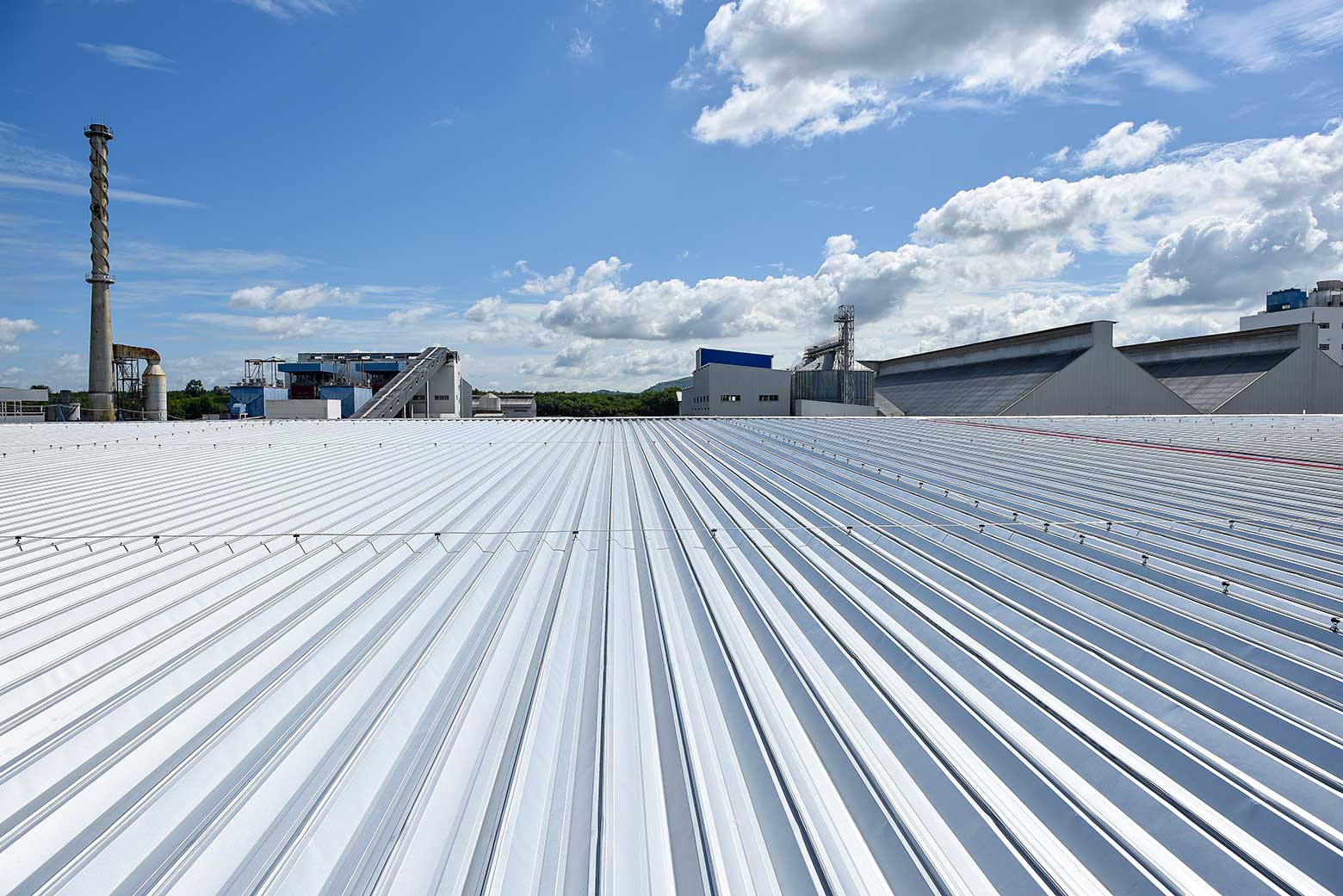
Galvalume vs. Painted Finish
Galvalume, a zinc-aluminum alloy coating applied to the steel substrate, is the base durability standard for commercial standing seam. Major manufacturers including Drexel Metals, McElroy, and MBCI ship to OKC-area distributors and carry a 40-year substrate warranty on Galvalume panels. The finish handles Oklahoma's thermal cycling, UV load, and hail exposure without the color-fade degradation that older painted finishes developed. When the building does not require a color statement, Galvalume is the straightforward specification: maximum longevity, lowest price per square foot, and no repainting obligation over the system's life.
Kynar 500 or 70%-PVDF painted finishes add color depth and architectural flexibility. These finishes are common on Automobile Alley and Film Row adaptive reuse projects where the metal panel system is part of the building's visual identity, dark bronze, weathering steel simulations, and deep charcoal tones have become standard choices on OKC mixed-use redevelopments. Kynar finishes carry the same 40-year substrate warranty as Galvalume and a 30-year color, chalk, and fade warranty from most manufacturers. They cost more per square than Galvalume but carry no repainting maintenance requirement over the warranty period.
One consideration specific to Oklahoma: cool-roof color selection on Kynar-finished panels matters because OKC commercial buildings face both extreme summer heat, roof surface temperatures above 160°F are routine in July and August, and significant hail exposure in spring. Lighter Kynar colors qualify for Cool Roof Rating Council ratings that support energy compliance, while the painted finish itself does not add hail resistance. We specify the CRRC-rated option when the project's energy compliance path requires it and pair it with panel gauge and cover board selections that address hail performance.
Snap-Lock vs. Mechanical Seam
Snap-lock panels interlock at the seam without a powered seaming tool. They install faster, cost less per square in labor, and are the standard choice for slopes above 3:12 where the panel can drain freely and the seam does not face sustained water pressure. Most commercial standing seam we install on sloped warehouse annexes and lower-profile office additions in the Bricktown and Wheeler District areas is snap-lock, where positive slope keeps water moving off the panel quickly.
Mechanical-seam panels are crimped at . The double-locked seam provides a weather barrier that performs reliably at slopes down to 1:12, the range where most commercial flat-to-low-slope standing seam applications fall. Any standing seam project on a building with a roof slope below 3:12 should specify mechanical seam. Snap-lock panels at low slopes are a documented failure pattern, and we will not specify them regardless of schedule pressure or cost constraints.
Thermal movement is a critical design factor on both seam types in Oklahoma City's climate. A standing seam panel run on a 200-foot commercial building in OKC will expand and contract considerably across the annual temperature swing from January lows to August highs. The concealed clip system, which holds the panel to the structural substrate while permitting longitudinal thermal movement, is the most common origin point for standing seam failures when it is under-designed. We size the clip pattern to the actual thermal range, the specific panel's coefficient of expansion, and the manufacturer's published allowance for the chosen clip assembly.
Substrate, Wind-Uplift, and Hail Considerations
Standing seam installs on structural metal deck, steel purlins, or solid substrate depending on panel span and the manufacturer's published load tables. Oklahoma City commercial buildings with metal deck typically use 2-inch or 3-inch corrugated deck that accommodates standing seam with 12-to-18-inch clip spacing. Long-span open bays, common in the industrial warehouses along the S Meridian and NW 10th Street corridors, may need intermediate purlins added to keep panel span within the manufacturer's allowable range.
Wind-uplift design on OKC commercial buildings running standing seam is not a formality. The clip spacing and fastener schedule must be calculated against the actual building dimensions, occupancy category, exposure category, and deck type under ASCE 7-22. Open-terrain buildings west of I-44 and elevated sites near Will Rogers World Airport require significantly denser clip patterns at corners and perimeters than sheltered downtown applications. We document the wind-uplift design in the project file alongside the fastener schedule.
Hail performance: Steel standing seam panels at 26 gauge or heavier perform well against hail up to 1.75 inches without functional damage. Oklahoma's documented hail history, the 2024 and 2019 seasons both produced 2-inch-plus stones across Oklahoma County, means hail gauge selection is a real engineering decision, not a theoretical one. Denting at heavy-hail events does not generally compromise watertight performance or warranty standing unless a seam or panel crack opens, but we discuss panel gauge selection in the context of each building's insurance program and the owner's risk tolerance for cosmetic damage.
Frequently asked questions
Can standing seam be retrofitted over an existing flat roof in Oklahoma City?
Yes. A standing seam retrofit over an existing flat roof uses a sub-framing system, Z-purlins or hat channels, installed over the existing roof surface to create positive slope and provide panel attachment points. The existing flat membrane stays in place as an air and vapor barrier. This approach is used on Automobile Alley and Bricktown warehouse buildings where the owner wants to add drainage slope and extend roof life without a full tear-off, and it allows the project to qualify for recover-system code compliance rather than requiring a new-construction fastener design.
How does standing seam hold up to Oklahoma's hail seasons?
Steel standing seam panels at 26 gauge or heavier resist functional damage from hail up to 1.75 inches. Above 2 inches, cosmetic denting can occur but typically does not open seams or compromise the watertight warranty unless the dent depth exceeds the manufacturer's threshold. We provide the UL 2218 impact rating for the specified panel on every project, this rating supports insurance premium discount qualification on Oklahoma commercial property policies.
What is the installed cost range for commercial standing seam in Oklahoma City?
Installed cost on an OKC commercial standing seam project generally runs $17-27 per square foot depending on panel gauge, finish, seam type, slope complexity, and existing substrate condition. This is $5-9 more per square foot than 80-mil TPO installed on the same building, but the 40-year substrate warranty versus a 25-30 year single-ply service life means the lifecycle cost per year of service is often comparable or lower for standing seam on buildings with a long hold horizon.
Next StepScoping a standing seam project on an Oklahoma City commercial building?
We will walk the roof, assess slope and structural capacity, and produce a standing seam specification covering finish, seam type, insulation stack, wind-uplift design, and warranty path, written to bid against.
Request a Metal Roof Scope →
Start with a roof walk.
Send the building address, roof concern, and timing. We will help define the next step.
Contact Us