
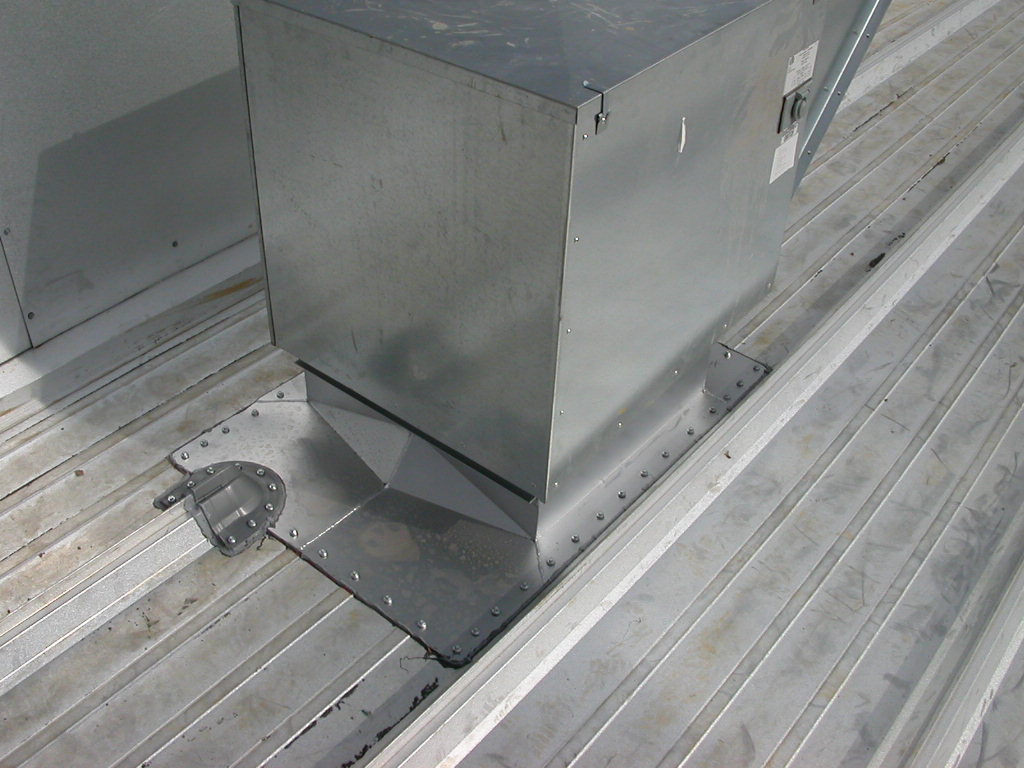
Curb Flashing Rebuild
A curb flashing rebuild strips the existing base flashing from the curb face, cleans and primes the curb substrate, and installs new membrane flashing per the roofing system manufacturer's curb detail. For TPO systems, the curb flashing is heat-welded to the field membrane at the curb base and mechanically terminated at the top of the curb face under the skylight frame. For EPDM systems, the base flashing is bonded with EPDM adhesive and terminated with a metal counterflashing tucked under the frame.
The frame interface is the most critical part of the curb flashing repair. The gap between the skylight frame's base and the curb flashing termination has to be sealed with a sealant that is compatible with the membrane and flexible enough to accommodate the thermal movement of the skylight frame. Aluminum skylight frames on Oklahoma City buildings move measurably over a full summer-to-winter temperature range, a rigid caulk fails at this joint within two or three storm seasons. We use manufacturer-specified flexible sealants at frame interfaces and document the product in the repair record.
On multi-unit skylight installations, common in the shell retail buildings along S Meridian Avenue and in the mixed-use projects in Midtown and the Plaza District, we assess all units during a single mobilization. Units sharing flashing runs often show progressive failure from the upslope unit downstream; repairing one unit while leaving adjacent units in marginal condition produces a callback within one storm season.
Glazing Replacement
Flat skylight glazing replacement on Oklahoma City commercial buildings involves acrylic (the standard glazing on most pre-2005 installations), polycarbonate (specified more frequently after 2005 for its superior impact resistance and UV stabilization life), or tempered glass (specified on installations where occupancy or insurance requires a Category II impact rating).
Oklahoma City's hail exposure makes the glazing specification decision consequential. We have replaced acrylic panels on buildings across the OKC metro following storms that left the surrounding field membrane intact but fractured multiple skylight panels. Polycarbonate panels rated to FM 4881, the Factory Mutual hail impact standard, are the defensible specification for new glazing in the OKC market, and some Oklahoma commercial property policies apply premium credits for impact-rated glazing. Given the documented annual hail frequency in Oklahoma County, the additional upfront cost of rated polycarbonate over standard acrylic is typically recovered in one avoided replacement cycle.
Glazing panel replacement requires removing the skylight frame's retaining bars, extracting the failed panel, inspecting and reseating the glazing gasket, installing the new panel, and reseating the retaining bars at the manufacturer's specified torque. We do not install replacement glazing without inspecting the gasket, a compressed or deteriorated gasket that is not replaced with the glazing panel produces a new leak at the frame line within the first rain event after installation.
Restoring Weathertight Seal
The completed skylight repair, whether curb flashing rebuild, glazing replacement, or both, receives a water test before we demobilize. We flood the curb for fifteen minutes and verify there is no water entry at the frame-to-flashing interface, the glazing gasket, or the retaining bar line. This is not optional in a market where the next storm may arrive within a week of the repair.
For Oklahoma City buildings where skylights serve as primary daylighting in tenant spaces, restaurants in Bricktown, retail in the Plaza District, office suites in Midtown's converted warehouse stock, we coordinate skylight repair around tenant operating hours. Weekend and overnight repair schedules are available for tenants who cannot have rooftop work done during business hours.
Frequently asked questions
How do I tell if my skylight is leaking at the frame or through the glazing?
The simplest test is to hose water on the glazing panel only, not the curb or frame, and wait fifteen minutes. If no interior leak appears, the glazing is intact and the source is at the curb or frame. If water appears, the glazing has a failure. We run this test as part of every skylight diagnostic.
Can I replace acrylic skylight panels with impact-rated polycarbonate?
In most cases, yes. The frame has to be capable of supporting the polycarbonate and its different thermal expansion coefficient. We assess the existing frame before specifying the replacement glazing material and advise when the frame would need modification to accept the new specification.
My skylight has yellowed but is not actively leaking. Does it need replacement?
Yellowing means the UV stabilizers in the acrylic have been consumed. The panel is now brittle and more susceptible to fracture under Oklahoma hail impact or thermal stress. It may not be leaking today, but its structural reserve is significantly diminished. We document yellowed glazing in inspection reports as a monitor-and-plan item, replacement is not always urgent, but it belongs in the capital plan within two to three budget cycles, and sooner in a market with Oklahoma City's hail frequency.
Is skylight repair covered by a commercial roof warranty?
It depends on the warranty. Most membrane manufacturer warranties cover the curb flashing as part of the warranted assembly. Glazing and frame components are typically outside the membrane warranty and fall under the skylight manufacturer's warranty, if one remains active. We clarify which components are under which coverage before starting any repair.
Next StepOKC skylight leaking or glazing showing age?
We identify whether the source is at the curb, the frame, or the glazing, then repair the right component with a weathertight detail we verify before we leave.
Request a Skylight Assessment →
Start with a roof walk.
Send the building address, roof concern, and timing. We will help define the next step.
Contact Us