
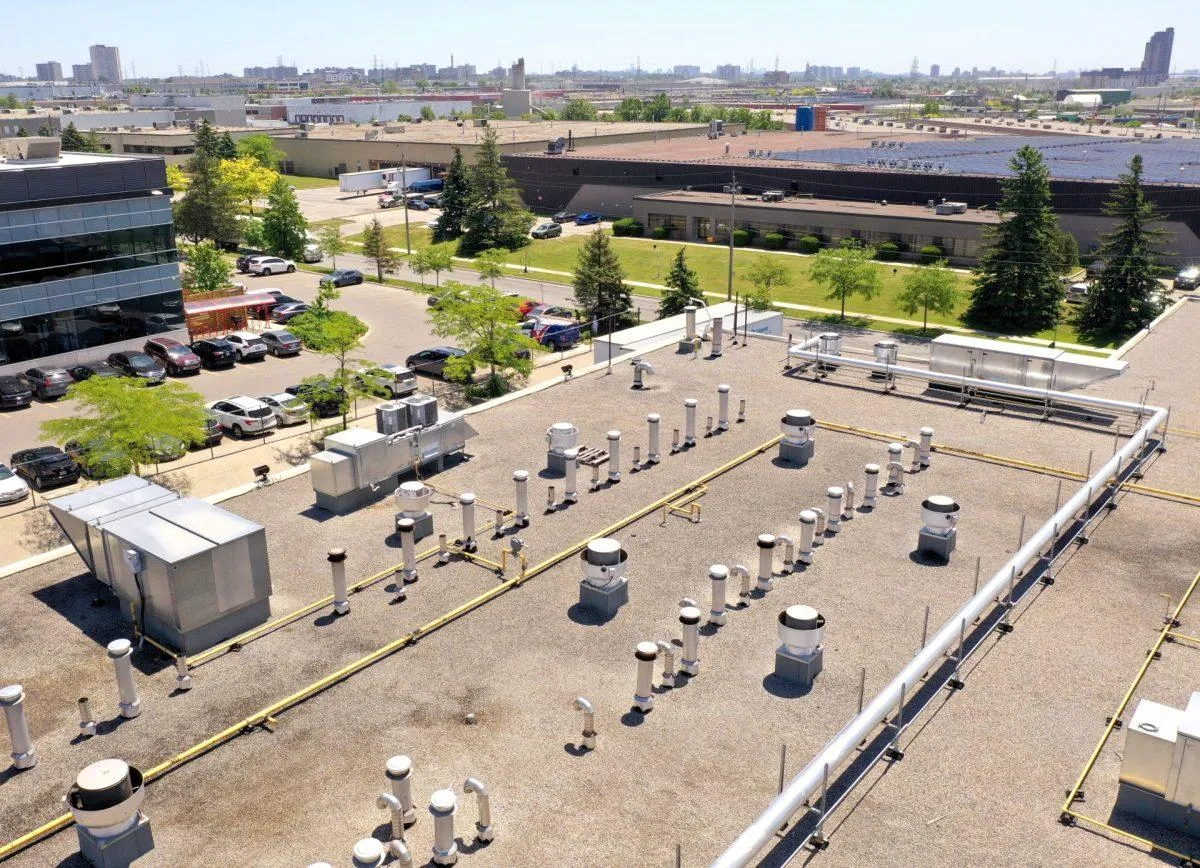
Food Processing Facility Roofing in Oklahoma City, OK.
The threat to a food plant roof comes from below as much as above
A food processing roof gets squeezed from two sides. From above it takes Oklahoma City's hail and wind like any other low-slope roof. From below it takes a steady push of warm, moisture-laden air off washdown cycles, cook lines, and sanitation crews hosing the floor every shift. That humidity wants to migrate up into the roof assembly and condense, and if the vapor control and drying capacity are not built for it, the insulation saturates and the deck corrodes while the surface still looks fine. We build food plant roofs to handle the interior environment, not just the sky.
Oklahoma City carries a deep food and beverage manufacturing base, and we work it across the metro, the meat and protein processors and the bakery and snack operations clustered in the Stockyards City and Agnew Avenue district on the near south side, the dairy and beverage plants, and the newer production tenants filling the industrial parks along Reno Avenue, Meridian, and the I-40 corridor. Each plant runs a different process and a different roof load, and we scope to the building in front of us.
Materials have to clear the food-safety plan first
Not every roofing product belongs over a food production area. USDA- and FDA-regulated plants require that the membrane, and just as importantly the adhesives, primers, and sealants in the flashing details, be confirmed acceptable for use above food zones before anything goes down. White TPO and PVC single-ply are generally workable over enclosed processing space, but the specific product and installation method still have to be checked against your facility's food-safety plan. A lot of standard roofing adhesives are solvent-based and simply do not belong above an open production line, we confirm material acceptability with your QA team before we spec, not after.
Refrigeration is the part most roofers get wrong
Freezer rooms, chill rooms, and blast-freeze areas change the roofing problem completely. The roof over a cold space has to keep the assembly's thermal and vapor behavior continuous, because the temperature difference drives moisture hard in one direction. Get the vapor retarder position or the insulation strategy wrong over a freezer and you get condensation forming inside the assembly, deck corrosion and failed insulation with no external leak to warn you. We design tapered insulation and vapor control over refrigerated areas around the actual operating temperatures and the local climate, so the cold chain stays intact and water never drains toward a freezer room.
Rooftop loads add up fast
Food plants stack weight on the roof, large refrigeration condensers, evaporative units, makeup-air handlers, and process equipment all sit up there, and they vibrate and they leak condensate. We account for those loads when we spec insulation thickness and attachment, confirm the deck can carry what is already up there before adding to it, and detail the condensate paths so refrigeration runoff is not quietly ponding against a curb. Drainage above a freezer matters twice over: standing water adds thermal load to the refrigeration system and accelerates deck corrosion underneath.
Production runs the schedule, and we work around it
Most OKC processors run two or three shifts with one weekly sanitation window as the only stretch when the floor is down. Roofing work that opens the envelope above an active line has to live inside that window, with the production team and QA manager confirming the floor is clean and protected before we start. We plan the phasing around your production calendar, sequencing tear-off and dry-in zone by zone so no open roof ever sits over running product, and confirming dry-in before each shift change.
What we check on a food plant walk
- Moisture content of the insulation through core cuts, especially over high-washdown and refrigerated areas
- Vapor retarder position and drying capacity against the interior humidity load
- Deck condition and corrosion under the membrane, where interior moisture shows up first
- Rooftop refrigeration and process-equipment loads versus deck capacity
- Condensate management and drainage so water never moves toward a freezer room
- Material and adhesive acceptability against your food-safety plan
If you run a processing or beverage plant anywhere in the Oklahoma City area and you are seeing staining over a wet area, condensation at the freezer, or you just want a moisture survey before the next inspection, we will get on the roof, core it where it matters, and give you a straight read.
Roof leaks and inspections are tied together in a food plant
USDA and FDA inspectors look at the roof from the inside. Evidence of a leak, condensation staining, or deteriorated ceiling near a production line is exactly the kind of moisture-entry finding that lands in an inspection report, and a chronic roof problem can put a facility on the defensive over food safety rather than just maintenance. We help on both ends of that. We keep condition documentation and repair records that your QA manager can produce to show proactive maintenance, and when we do find an active entry point we close it as a priority rather than letting it sit between scheduled visits.
White membranes do double duty on a processing roof
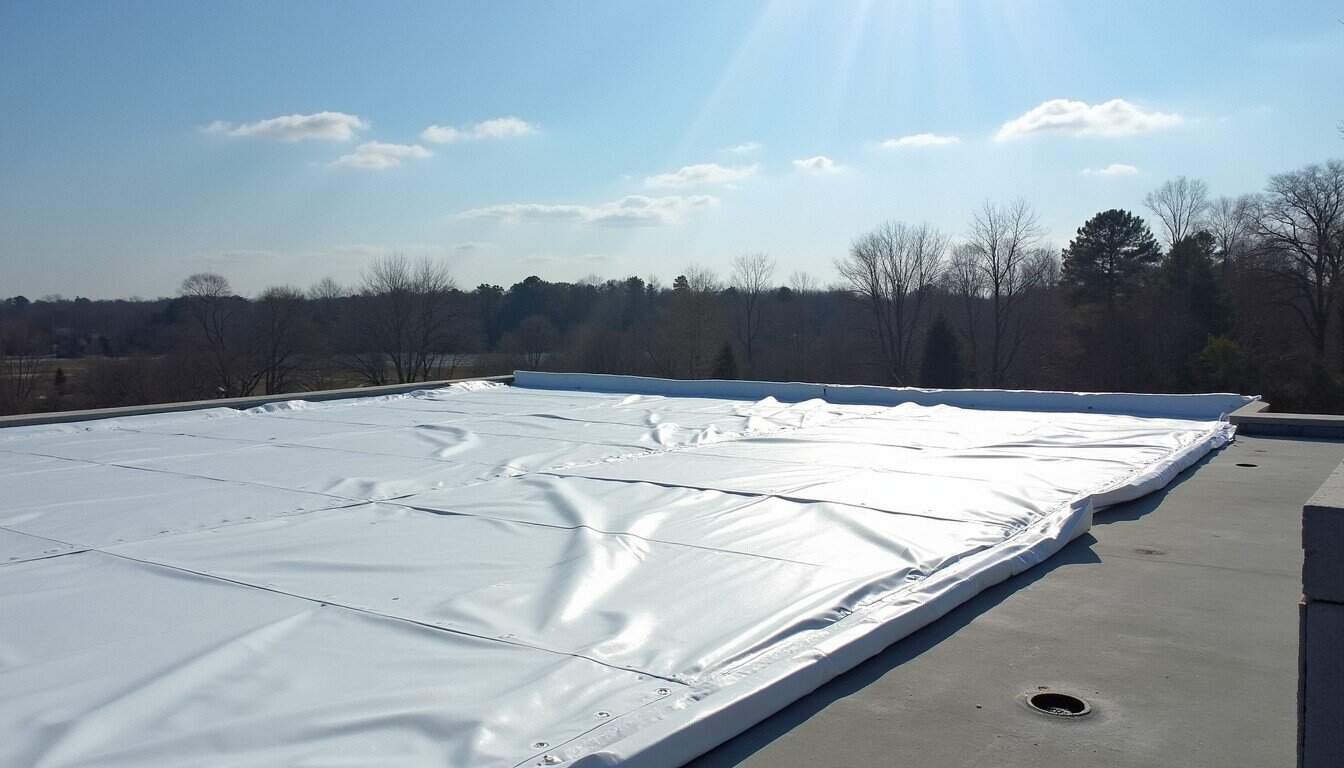
The reflective white TPO and PVC systems we favor over enclosed processing space are not only acceptable in food environments, they cut the heat load the roof passes into the building, which matters when you are already running hard on refrigeration and cooking heat underneath. On a metro that runs long, hot summers, a reflective membrane reduces the work the mechanical systems do to hold temperature on the production floor. We weigh that against the structural and warranty considerations when we recommend a system, so the roof is pulling its weight on energy as well as keeping water out.
Common questions about food processing roofing in Oklahoma City
Are all roofing materials acceptable over food production?
No. USDA- and FDA-regulated facilities require membranes, adhesives, primers, and sealants to be confirmed acceptable for use over food zones before installation, and that is not universal across products. We identify your regulatory framework and confirm material acceptability with your QA team before specifying anything over a food-contact area.
How do you schedule work in a plant that never stops?
We build the phasing around your production schedule, concentrating envelope work above active lines into the weekly sanitation window or a planned shutdown and confirming dry-in before each shift change. Work near refrigeration is coordinated with your refrigeration team so the cold chain is never compromised.
What happens if a leak occurs over a running line?
It is treated as a potential food-safety event, not a routine repair. Our emergency response includes round-the-clock contact, priority mobilization for temporary dry-in, and documentation support for your incident reporting, with that contact information provided at closeout on every project.
Start with a roof walk.
Send the building address, roof concern, and timing. We will help define the next step.
Contact Us