
Airport & Aviation Roofing Questions
How do you handle project scheduling at an operational airport like Will Rogers World Airport?
We work with the airport facilities department and FAA Part 139 coordinator to develop a phased work plan approved by airport operations. Material deliveries, crane lifts, and any work near airside areas are scheduled during approved windows and coordinated with the FAA NOTAM process if required. We've done this at multiple airports and it's a standard part of our project setup, not an exception.
What roof systems are standard for large-span airport terminal roofs?
Most terminal re-roofing in Oklahoma City uses a TPO or PVC single-ply membrane on a tapered insulation system designed to improve drainage and address ponding. For new high-bay aviation structures and hangars, standing seam metal is often specified. The selection depends on the existing deck, load capacity, and operational constraints, we develop a spec after walking the roof with your facilities engineer.
How do you deal with the density of HVAC and mechanical penetrations on airport terminals?
Terminal HVAC density is significantly higher than standard commercial. Our pre-project survey documents every penetration, curb height, and mechanical clearance before we develop the work plan. Flashing details for oversized equipment curbs and complex through-penetrations are engineered individually, we don't use standard commercial-pattern flashing details on aviation structures.
Can you work on airside structures (cargo aprons, gate structures near active runways)?
Yes, with appropriate badging and in full coordination with airfield operations. Airside work requires a higher level of pre-planning and crew credentialing, which we factor into the bid timeline. We do not mobilize crew members without confirmed airside authorization, that's a baseline requirement we enforce, not a favor we ask.
Do you handle hangar roofing for FBOs and general aviation facilities?
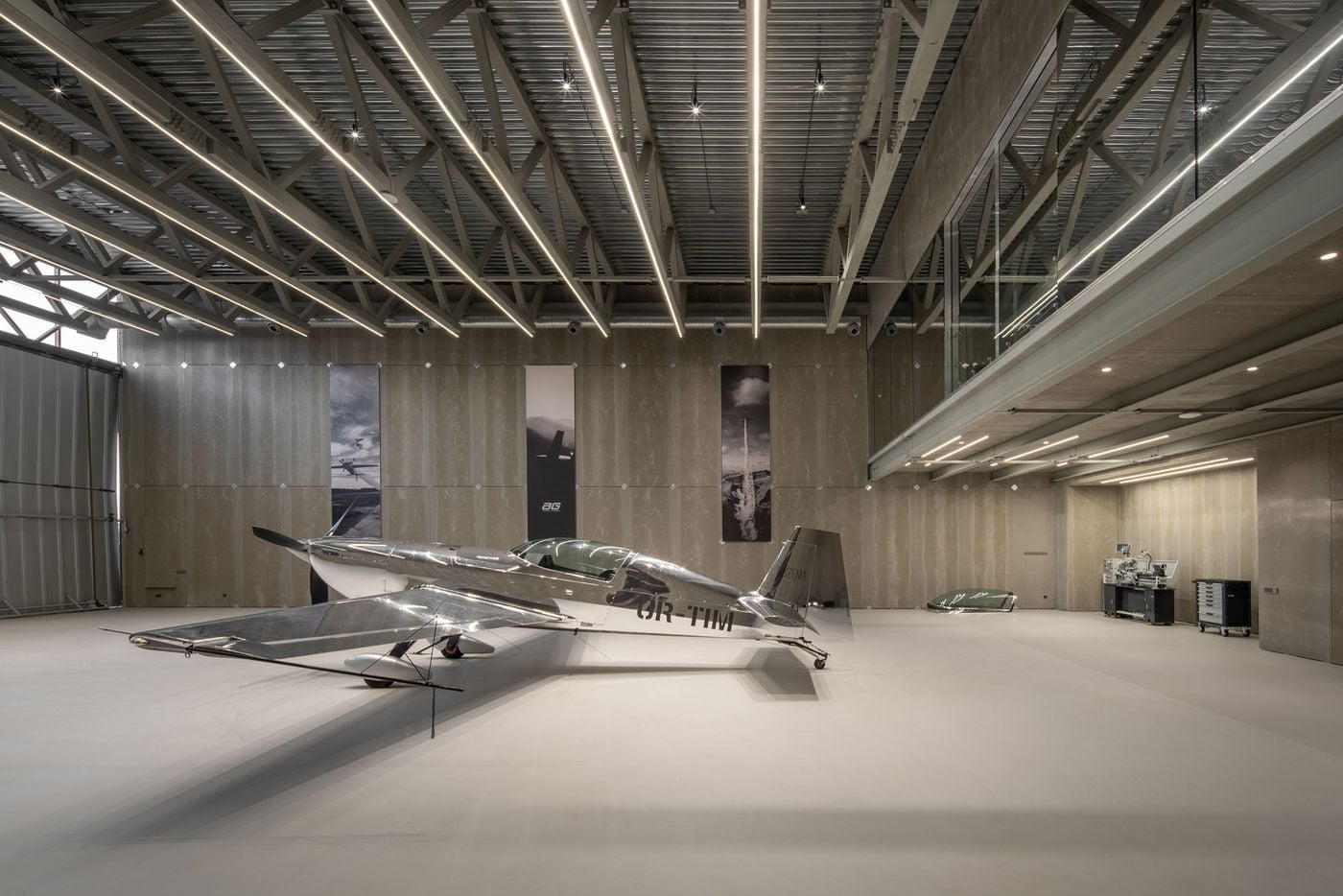
Yes. General aviation hangar roofing, whether for a single-bay private hangar or a multi-unit FBO complex, is a regular part of our commercial project mix in Oklahoma City. High-bay hangars with wide-flange steel or pre-engineered building systems require roofing contractors who understand those structures' specific uplift and thermal movement characteristics. We do.
Airport terminal and aviation facility roofing in Oklahoma City, OK, Will Rogers World Airport and surrounding general aviation and cargo facilities.
Oklahoma City's warehouse inventory is concentrated along two corridors that define the commercial roofing market here. The I-40 corridor from I-235 west through Yukon holds millions of square feet of 1980s and 1990s warehouse construction, most of it running original or first-replace modified bitumen that is at or past its warranty life. The Will Rogers World Airport industrial zone along SW 59th and S Meridian produced a second generation of distribution and light-industrial buildings in the 2000s and 2010s, the majority of which are approaching their first major maintenance milestone on mechanically attached TPO.
Large-deck warehouse roofing in the OKC market carries a complication that most other markets do not face at the same severity: Oklahoma is one of the top five states nationally for documented annual hail frequency, and hail events in the 2-inch range are not rare in Oklahoma County. A 200,000 sq ft warehouse roof represents a significant insurance exposure if the membrane and cover board do not meet impact-resistance ratings. We specify every warehouse reroof in this market with an HD cover board, not as an upgrade, but as the baseline specification that qualifies the system for FM 4470 Class 1 hail-resistance ratings and supports insurance premium discounts on Oklahoma commercial property policies.
The rooftop equipment density on OKC's I-40 corridor distribution centers, multiple HVAC units, exhaust fans, dock ventilation stacks, fire suppression risers, means flashing work is the most labor-intensive component of most warehouse reroofs. We scope penetration counts during inspection, not after mobilization.
I-40 Corridor Warehouse Inventory
The I-40 corridor from NW Expressway west through El Reno carries the highest concentration of Oklahoma County warehouse and distribution inventory. Buildings in this corridor were predominantly built 1975-2000 on metal deck with built-up or modified bitumen roofing. The open-terrain exposure category for most of these buildings, minimal surrounding development, prevailing southwest wind without significant obstruction, drives fastener density requirements well above what a sheltered urban site would need. We calculate wind-uplift specifications using ASCE 7-22 actual building dimensions and exposure category, not a generic code table.
The Will Rogers World Airport industrial zone along SW 59th Street and S Meridian Avenue adds a layer of coordination for any crane or elevated-work permits, the airport authority requires notification and, for We handle this permitting as part of our project management scope. Building management does not need to navigate FAA coordination independently.
Hail Resistance Specification for OKC Warehouses
Standard-density polyiso insulation under a single-ply membrane meets code but does not qualify for impact-resistance ratings. Every warehouse reroof we scope in Oklahoma County includes HD polyiso or HD gypsum cover board sized to qualify for FM 4470 Class 1 or UL 2218 Class 4, the ratings that most Oklahoma commercial property insurers require to apply hail-resistance premium discounts. We document the rating on every install and provide the certification the insurer requires. The cover board adds modest per-square cost and pays back in reduced insurance premiums on buildings in the 100,000 sq ft and above range.
For I-40 corridor warehouses that have sustained documented hail damage in the 2024, 2022, or 2019 seasons, we review available insurance claim files and any prior damage reports before specifying the replacement system. Prior hail events can compromise the existing insulation stack in ways that are not visible from the surface, moisture core pulls at representative locations tell us whether a recover is viable or whether full tear-off is the honest scope.
Production Sequencing Around Dock Operations
OKC's major distribution facilities, the FedEx Ground hub on SW 104th, the Amazon distribution network operating out of Will Rogers Airport-adjacent buildings, and the large 3PL facilities along the I-40 and I-35 interchange corridors, run 24-hour operations that cannot be shut down for a roof replacement. We coordinate production windows with the facility's operations schedule before mobilization, not after. Tear-off is staged in sections sized to allow same-day dry-in, and we sequence zone production around peak inbound and outbound shipping windows.
Interior protection on occupied warehouses is not optional. When we tear off modified bitumen above active pick-and-pack lines or high-value inventory, we use vacuum-equipped equipment that pulls material to containers at grade rather than letting debris fall to the deck. Poly ceiling protection is part of the pre-construction scope on facilities with inventory or equipment exposure directly below the work area.
Frequently asked questions
Can you work around 24-hour distribution operations on the I-40 corridor?
Yes. We coordinate production windows with your operations schedule before mobilization. Tear-off in sections with same-day dry-in is standard practice for active facilities. We have run warehouse reroofs around continuous operations at multiple OKC-area distribution facilities and produce a written zone-by-zone production schedule before contract signing.
Do I need an HD cover board on my Oklahoma warehouse roof?
For most Oklahoma County warehouses, yes. Standard-density insulation does not qualify for FM 4470 Class 1 or UL 2218 Class 4 hail-resistance ratings, which most Oklahoma commercial insurers require to apply premium discounts. The cost difference per square is modest relative to the insurance savings on a 100,000+ sq ft building. We specify HD cover board as the baseline on every Oklahoma warehouse reroof.
Do I need FAA coordination for crane work near Will Rogers Airport?
Depending on crane height and proximity to the flight path, yes. We handle airport authority notification and any required FAA coordination as part of our project management scope. We make this determination during the inspection walk and build the permit lead time into the pre-construction schedule.
How do you handle moisture in older I-40 corridor warehouse roofs?
We pull moisture cores in representative locations on any roof we suspect has insulation saturation. If more than 25 percent of cores read wet, full tear-off is the appropriate scope, recovering wet insulation traps moisture and voids the new warranty. If under 25 percent, a recover with targeted insulation replacement at wet areas can extend the asset at roughly half the cost of full replacement. We document core results and provide the recommendation in writing before any scope is signed.
Next StepGet a warehouse roof scope for your OKC distribution facility.
Our project managers will walk the full deck, document equipment penetrations and ponding patterns, and deliver a written scope with production phasing tuned to your operations schedule.
Request a Roof Report →
Start with a roof walk.
Send the building address, roof concern, and timing. We will help define the next step.
Contact Us