
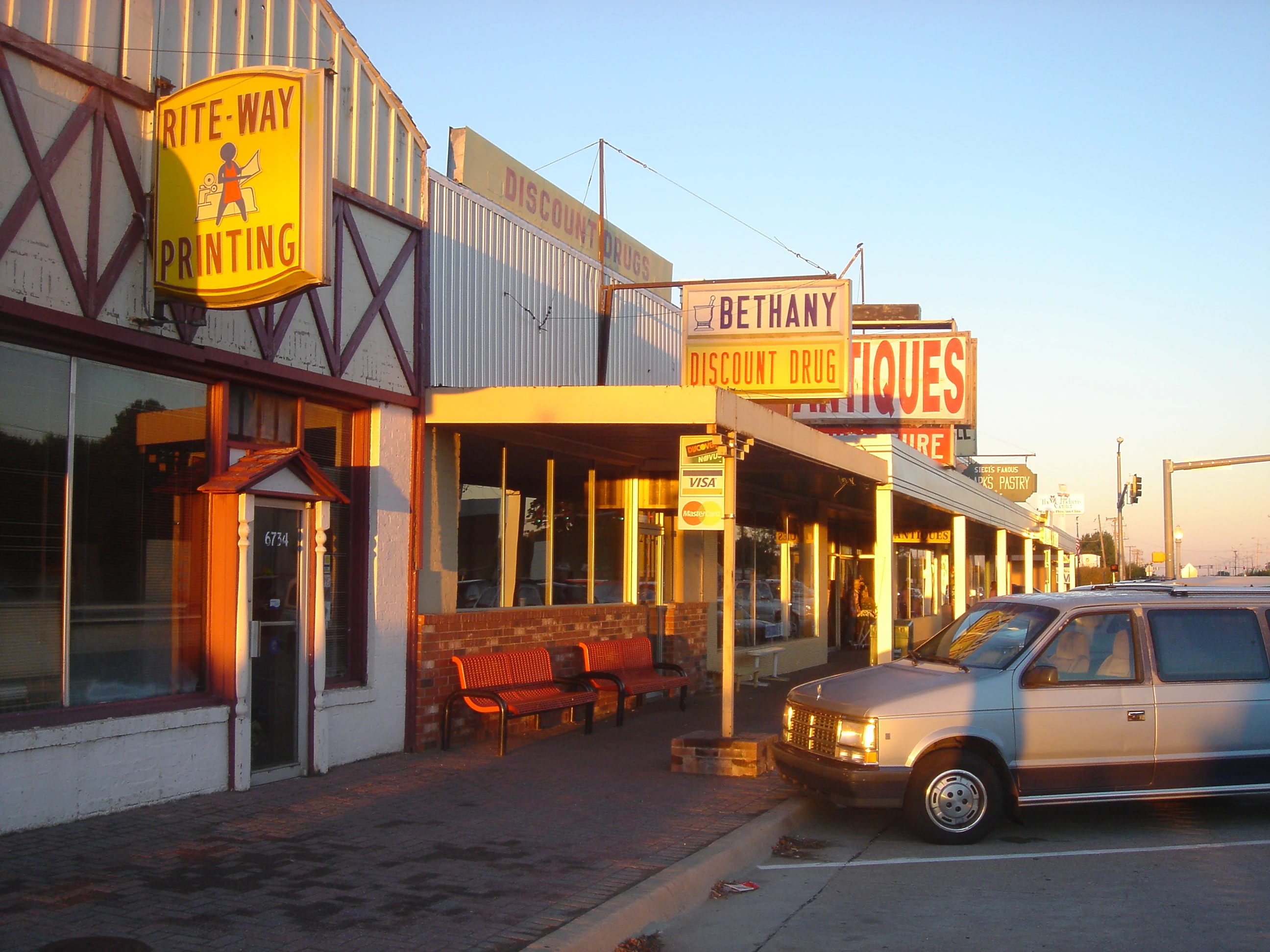
Bethany Roof Inventory by Zone
For commercial properties in Bethany, OK., OK, the defensible choice between repair, restoration, and replacement starts with roof-system condition, moisture findings, drainage performance, and remaining service life. Oklahoma Christian University campus (College Avenue / NW 39th area): Academic, student-services, and auxiliary buildings across the main campus. Building vintage ranges from original 1950s-1960s academic structures with built-up roofs through 2010s additions. OC campus work requires coordination with the university's facilities office. State-exempt from some municipal permit requirements as a private institution, but OC maintains its own project documentation standards.
NW 39th Expressway commercial corridor (MacArthur Boulevard to Council Road): The primary commercial spine of Bethany, running east-west through the middle of the city. Service stations, restaurants, medical-office buildings, and retail strip centers built primarily 1970-2000. The 1970s and 1980s structures in this corridor are running original or first-recover built-up roofing systems that are at or past viable maintain status, this is the most active replacement segment in Bethany.
Council Road and NW 23rd Street commercial zone: Industrial, service-commercial, and neighborhood-adjacent retail buildings at the western and northern edges of Bethany. These buildings tend to be smaller footprint, 3,000-20,000 sq ft, and represent a mix of retail, auto-service, and light-industrial uses. Older structures in this zone have built-up or coal-tar roofing that requires full tear-off before any new system can be applied.
NW 36th Street commercial-commercial transition: Small commercial and institutional buildings at the commercial boundary. Medical-office, church auxiliary, and community-service buildings in this zone are typically 2,000-10,000 sq ft on single-ply systems installed in the 1990s-2000s.
Soil Movement and Flashing Conditions in Bethany
Bethany's underlying red clay performs the same shrink-swell cycle that affects all of central Oklahoma County, typically 1-3 inches of seasonal movement at the foundation, which transmits through the structure and appears at rooflines as flashing separation at parapet walls and drain elevation drift. On the 1970s-1980s commercial buildings along NW 39th, we routinely find parapet flashings that have separated from the wall face because the original flashing was specified with rigid metal that could not accommodate 30-plus years of seasonal movement. Replacement scope for these buildings includes flexible perimeter flashings designed for the movement range we expect on Oklahoma clay.
Summer heat loading on Bethany's older dark-membrane roofs is among the highest we measure in the OKC metro. Original coal-tar and asphalt built-up roofing on 1970s commercial buildings reaches surface temperatures exceeding 170°F on July and August afternoons. Cool-roof membrane replacement, white TPO or white PVC, reduces surface temperatures by 50-80°F and typically qualifies for Oklahoma Gas and Electric utility rebates on commercial buildings that
Frequently asked questions
Does Bethany require its own permit for commercial roofing, even though it's surrounded by OKC?
Yes. Bethany is an independent municipality and requires its own building permit through the City of Bethany Community Development office. Oklahoma City permits do not cover work within Bethany's city limits. We pull the Bethany permit as part of every replacement project, the permit package is included in pre-construction deliverables.
Can you work on Oklahoma Christian University campus buildings?
Yes. OC campus work is coordinated through the university's facilities office. We are experienced with institutional and academic roof work across the OKC metro and our documentation practices
What roofing system is typically right for Bethany's older NW 39th corridor buildings?
For 1970s-1980s Bethany commercial buildings on original built-up or coal-tar roofing, full tear-off through the deck surface followed by a mechanically attached TPO system with HD cover board is the standard scope. We do not recover coal-tar roofing, coal-tar is not compatible with most modern single-ply membranes and must be fully removed. The tear-off is typically a significant cost line but it is the only path to a warranted system.
Next StepBethany commercial roof inspection or NW 39th corridor replacement scope?
Our project managers will walk the roof, assess the existing system's age and condition against the building's specific soil-movement and heat-loading context, and produce a written report for capital planning or insurance documentation.
Request a Roof Report →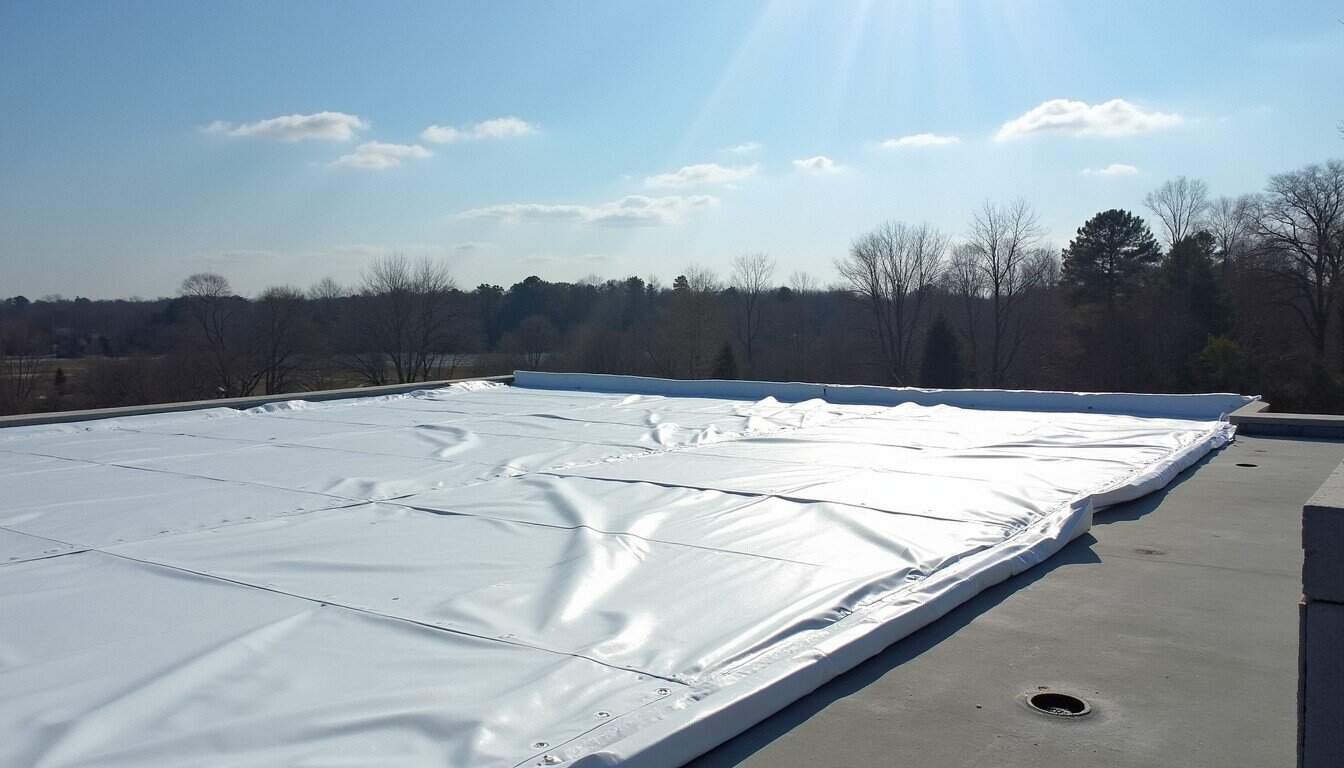
Start with a roof walk.
Send the building address, roof concern, and timing. We will help define the next step.
Contact Us