
The Most Common OKC Commercial Roof Leak Sources
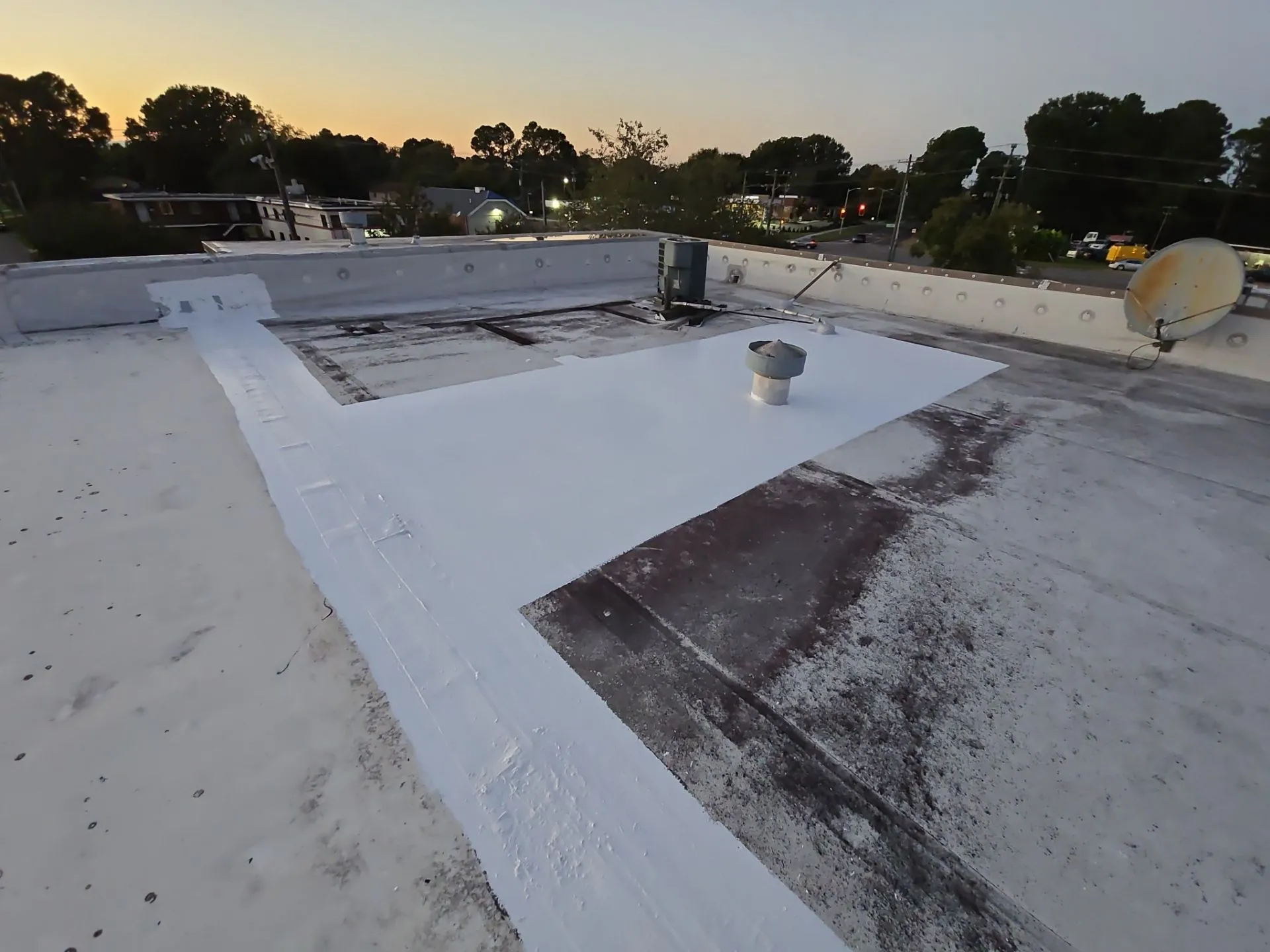
Parapet wall flashings are the most frequent leak source on OKC commercial buildings that are 15 or more years old. The through-wall flashing at the parapet base cycles through Oklahoma's temperature extremes, surface temperatures above 165°F in July, sub-freezing temperatures in January and February, and loses adhesion at the wall bond over time. The failure is gradual and often produces seasonal leak patterns: the building leaks in winter when freeze-thaw cycling opens the crack, and is dry in summer when thermal expansion seals it temporarily. We document the seasonal pattern when building staff can describe it, because it helps diagnose the source before we open any membrane.
Drain collar failures are the second most common source. Oklahoma City's clay soils cause enough seasonal vertical movement in the building's perimeter structure to gradually misalign roof drains from their original elevation. A drain that is sitting a quarter inch higher than the surrounding membrane creates a ponding ring that keeps the drain collar under constant water load, accelerating the collar bond failure. We measure drain elevation relative to membrane surface on every maintenance inspection and flag any drain that is trending toward a pooling configuration.
HVAC curb flashings and pipe penetrations are the third category. OKC's commercial buildings tend to have high rooftop equipment density, HVAC units, makeup air units, exhaust fans, and gas lines on medical and food-service buildings. Every penetration is a potential leak source as its curb flashing ages. We inspect every penetration as part of any leak diagnosis call, not just the one the building staff suspects.
Infrared Scanning and Core Sampling for OKC Leak Diagnosis
Infrared thermography is most effective on OKC roofs during the late-summer and early-fall season, September and October, when the thermal mass differential between dry and saturated insulation is at its peak after summer heat loading. A roof scanned after sunset on a day that reached 100°F will show saturated insulation zones clearly against dry zones. We schedule infrared scans for leak diagnosis during this window when the building conditions support it.
Core sampling is the definitive leak diagnosis tool for suspected insulation saturation. A core pull at a suspected saturation zone confirms whether the insulation is wet, how deep the saturation has penetrated, and whether the deck below shows corrosion or moisture staining. On OKC buildings where the insulation has been saturated through multiple hail seasons without repair, the saturation pattern often extends well beyond the visible leak zone. Core results are photographed, logged, and included in the written diagnosis report.
We do not open membrane for repair until we have located the source with confidence. Opening membrane in the wrong location creates a new breach and does not address the original problem. The diagnostic investment, infrared scan, core samples, systematic exterior inspection, is the step that makes the subsequent repair reliable.
Repair Scope and Documentation
Leak repair scopes for OKC commercial buildings are written to address the confirmed source, the infiltration path, and any secondary damage that has resulted from the infiltration. Flashing repairs are detailed to current manufacturer recommendations, not to the original installation specification, which may have been below current best practice for Oklahoma's climate conditions. Drain collar repairs include elevation adjustment where the drain has migrated above membrane level.
We document the repair scope with before-and-after photos at every repair location, a written scope that identifies the source, the repair method, and the materials used, and a post-repair water test where the roof configuration and the repair type make a water test practical. The documentation becomes part of the building's roof maintenance record.
For leaks that turn out to be symptomatic of a broader system failure, widespread insulation saturation, widespread flashing degradation across multiple penetrations and parapet zones, we provide a written assessment of the broader condition and a recommendation for whether a repair program can stabilize the system or whether replacement is the appropriate scope.
Frequently asked questions
We have had the same roof leak repaired twice and it keeps coming back. Why?
Recurring leaks on OKC commercial buildings almost always mean the repair addressed a secondary path rather than the primary source. Water on a flat roof travels, sometimes 20 to 30 feet from source to interior drop point. If the repair was done at the interior drop location rather than the exterior source, the leak recurs because the source is still open. We locate the exterior source before any repair cuts are made.
How does Oklahoma's clay soil movement affect roof leaks?
Significantly. Oklahoma County's red clay soils expand and contract seasonally by amounts that are large relative to other major commercial markets. That movement stresses parapet flashing bonds, misaligns roof drains, and creates stress at building expansion joints. On buildings we maintain over multiple years, we track these movement indicators as leading indicators of the flashing failures that will eventually produce leaks.
Can you do an emergency leak response for an active interior water infiltration?
Yes. Emergency dry-in response for active leaks in downtown OKC and the inner metro is within four business hours for buildings we maintain, and same-day for new calls. We stabilize the building with a temporary dry-in, document the source location and the extent of active water infiltration, and schedule the permanent repair as a separate scope once the source is confirmed.
Is a roof leak always an insurance claim?
Not necessarily. Leaks caused by normal aging and maintenance-deferred flashing failures are typically not covered by commercial property insurance, those are maintenance items. Leaks that are directly caused by a documented storm event may be claimable depending on your policy. We document the source and describe the likely cause, storm-caused versus maintenance-related, in every leak diagnosis report. The coverage determination is between you and your insurer.
Next StepActive or recurring leak on an OKC commercial roof?
We locate the source before we cut, systematic exterior inspection, infrared scanning, and core sampling, then produce a written repair scope with documentation your maintenance records and your insurer can use.
Request a Leak Diagnosis →
Start with a roof walk.
Send the building address, roof concern, and timing. We will help define the next step.
Contact Us